A running shoe upper, spun into shape.
Most shoe uppers begin as pieces that must be cut and joined. LightSpray asks what happens when the material arrives already following the shape it needs to become.
 CH Switzerland
In practice. On introduced LightSpray in July 2024 with the Cloudboom Strike LS running shoe and documented its robotic manufacturing process.
What to keep in view
Production-speed and environmental comparisons are manufacturer-reported. The cited lifecycle assessment is about the upper; it does not establish an equivalent reduction for the complete shoe or independent long-term durability.
Forming replaces some assembly
On’s July 2024 launch describes a continuous-filament process in which a robot forms an upper around a last. The initial Cloudboom Strike LS pairs that upper with a separate sole system. The whole shoe is not sprayed into existence.
The company describes a production cycle of roughly three minutes for the upper. That is a process claim, rather than the elapsed time needed to make, finish and deliver a complete pair.
Ask where the comparison starts and ends
The published lifecycle assessment focuses on the upper and its manufacturing. Its boundary matters: a reduction in one component’s production footprint cannot simply be applied to the complete shoe, its use or its disposal.
Our reading: the interesting shift is from assembling many pieces to controlling how material is deposited. The value of that shift still needs to be judged alongside fit, durability, repair and the rest of the product.
Read next.
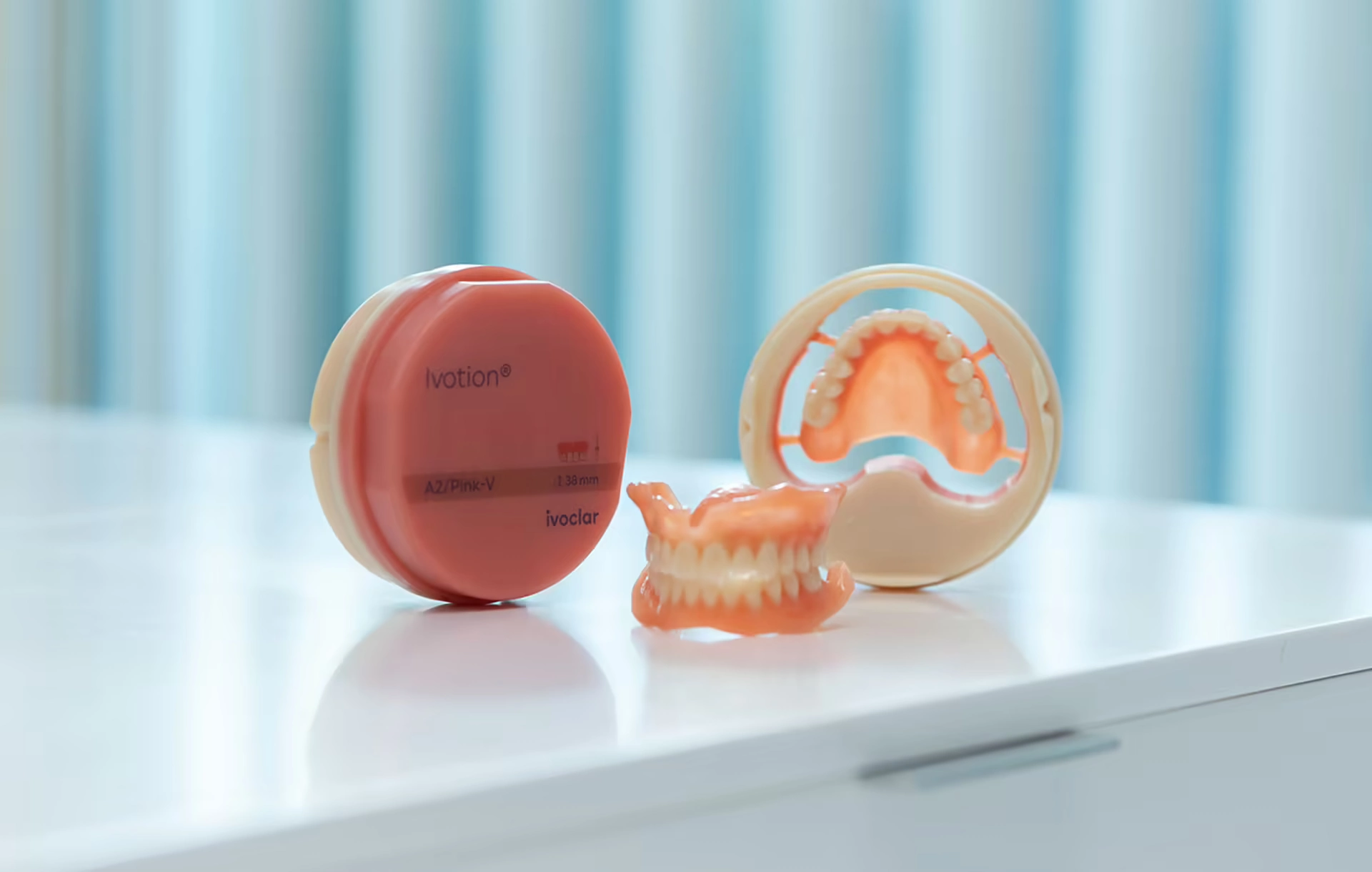
Put the material connection inside the milling blank.
Both move part of assembly into the manufacturing process itself. Compare a two-material dental blank with a spray-formed shoe upper.
Keep the material close to the idea.
Both connect product design closely with a specialised manufacturing process. Compare control of titanium fabrication with a robot forming a shoe upper directly.