Put the material connection inside the milling blank.
The white and pink parts of a denture usually have to meet somewhere in the fabrication process. Ivotion puts that material boundary inside the milling disc, changing what the technician needs to assemble afterwards.
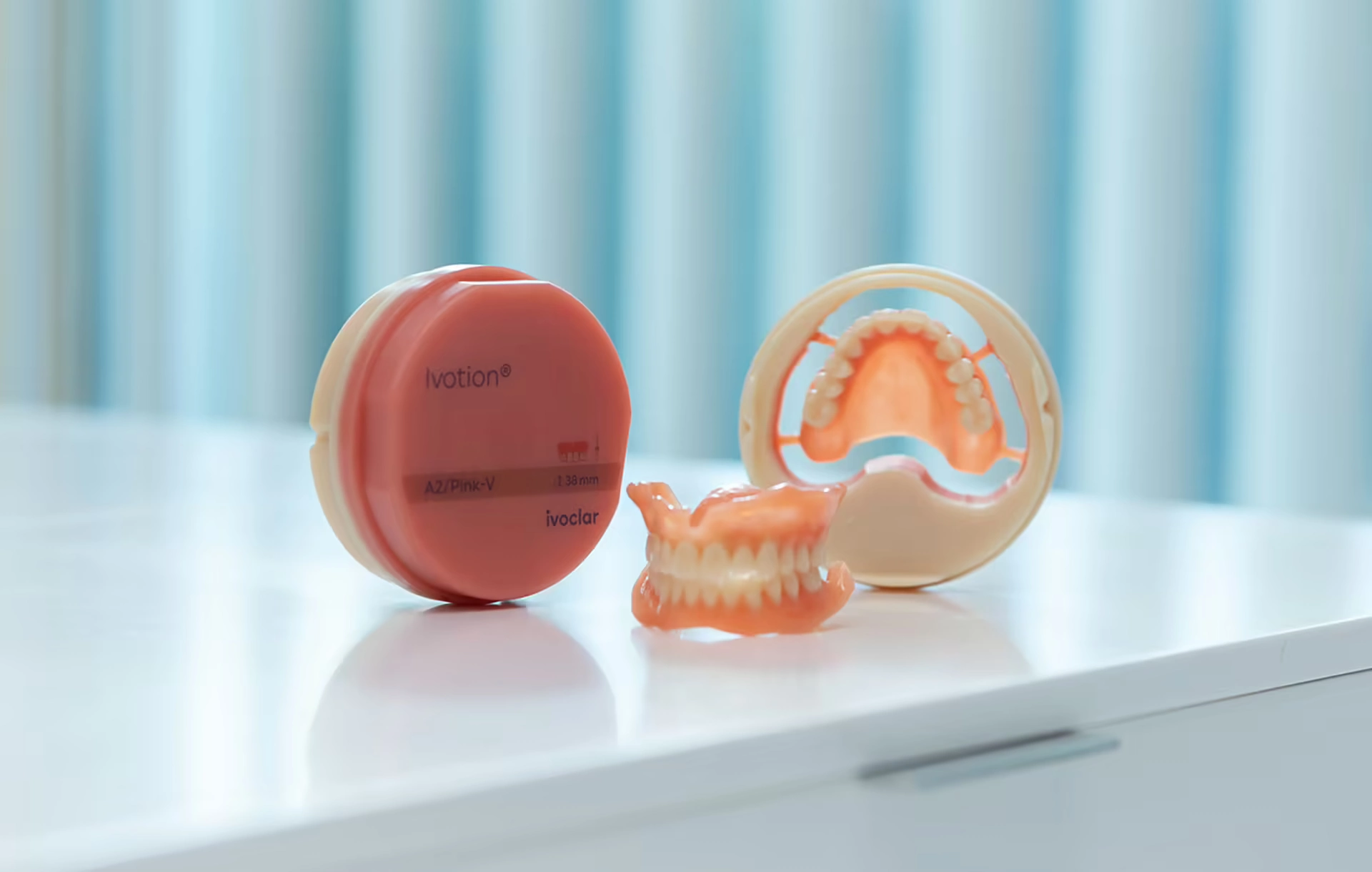
In practice. A Liechtenstein-developed dental manufacturing system introduced in 2020, combining tooth and base materials in one disc.
What to keep in view
Milling is one stage of a professionally planned treatment. Scanning, design, fitting, material waste, remakes and repair remain relevant; it is not one-step dental care.
Resolve the join inside the starting material
Ivoclar introduced the Ivotion system in 2020. Its milling disc combines tooth and denture-base materials with a defined internal boundary called Shell Geometry. Digital design positions the denture within that boundary before the machine cuts the finished form.
The manufacturer describes this as a monolithic fabrication workflow: the tooth and base regions come from one disc, without bonding individual teeth into the base afterwards. The material blank is therefore part of the process design, not merely something the milling machine removes.
Look beyond the milling step
Our reading: a manufacturing improvement can come from changing the starting material so that a difficult later assembly step is already resolved. The useful comparison is between complete workflows, including their exceptions, rather than one machine cycle.
This remains professionally planned dental work. Consultation, clinical records, design, fitting and follow-up are still required. Material waste, remakes and repair also belong in any practical comparison. The manufacturer’s description supports the process mechanism; it does not establish that every patient or laboratory will get the same result.
Read next.
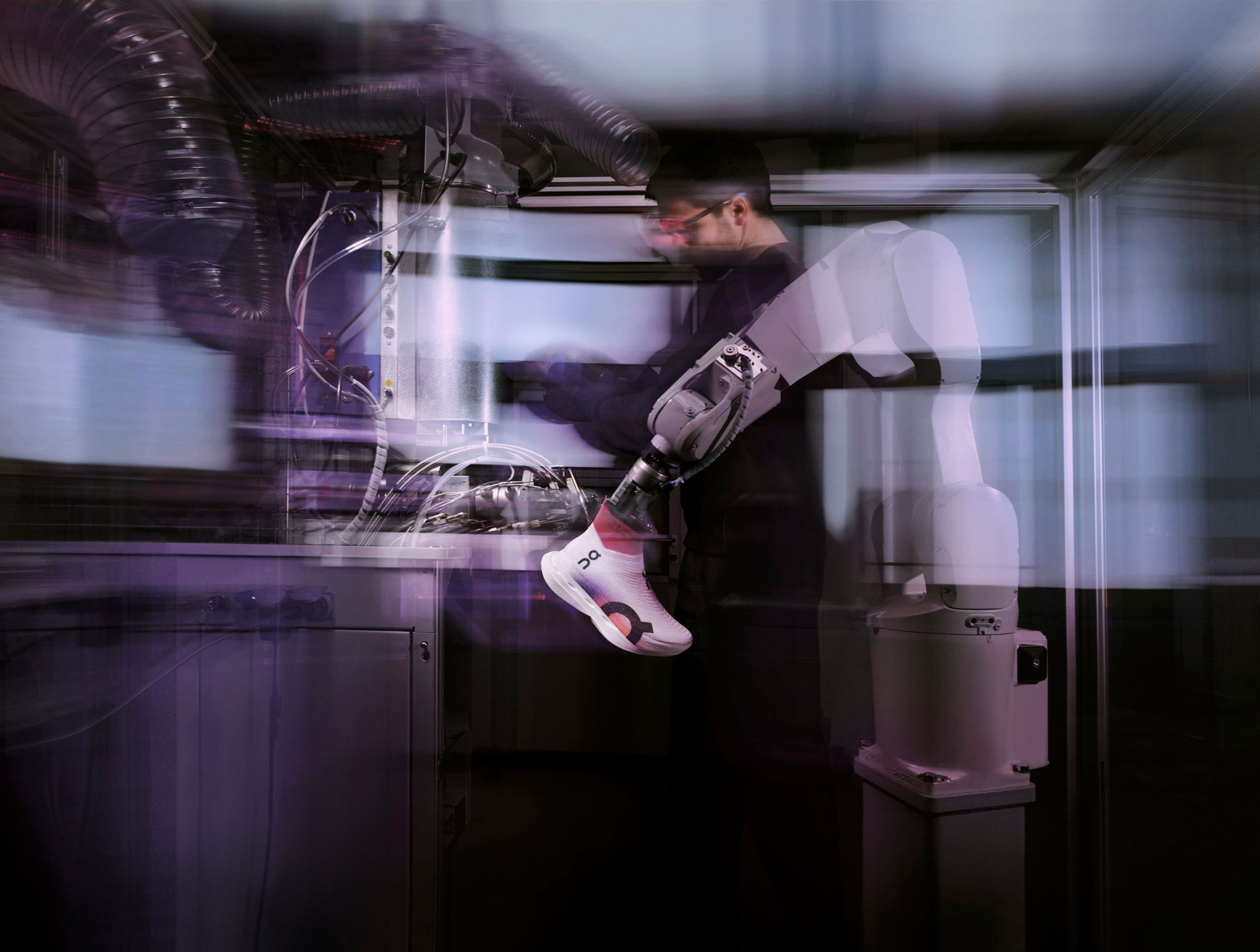
The robot makes the upper.
Both move part of assembly into the manufacturing process itself. Compare a two-material dental blank with a spray-formed shoe upper.
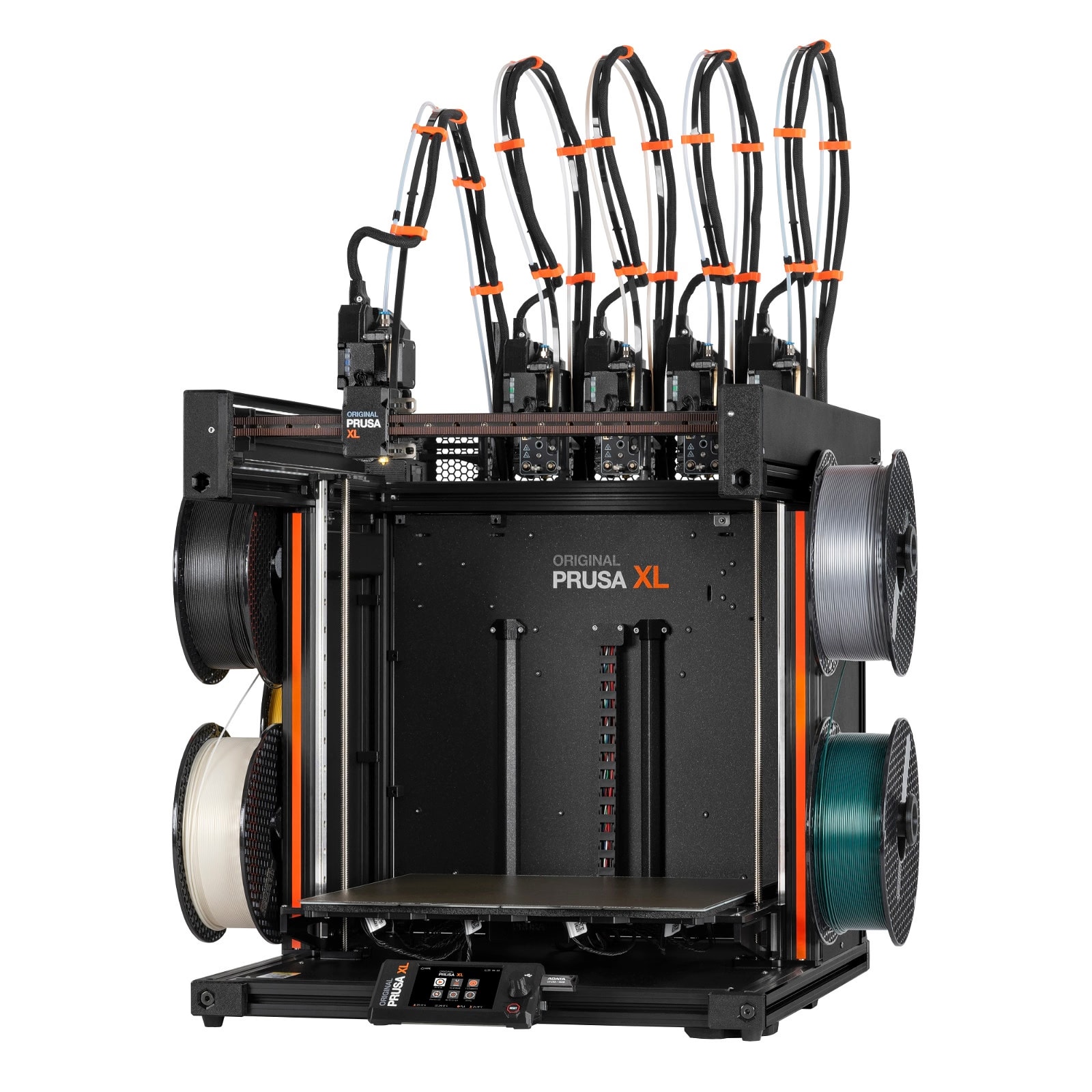
A different way to switch materials.
Both coordinate material and tool decisions before the object is complete. Subtractive dental milling and multi-tool additive printing follow different workflows.