A bicycle fork that flexes instead of sliding.
Look beside the front wheel. The distinctive links are not decoration: they are part of a spring arrangement that lets the wheel move while the fork bends in a controlled way.
 IS Iceland
In practice. The Grit SL product documentation specifies 30 mm of travel and an undamped S2 glass-fibre leaf-spring system for gravel riding.
What to keep in view
Travel and construction details are manufacturer specifications. This is an undamped gravel fork, not an equivalent to long-travel mountain-bike suspension. Comfort and handling depend on the rider, setup and terrain.
A different route to short travel
Lauf’s Grit SL uses composite leaf springs rather than telescoping suspension legs. The manufacturer specifies 30 millimetres of travel and explains that the system has no hydraulic damping. It is designed around the small, repeated impacts of gravel riding.
The company’s history connects the idea to experience with composite prosthetic feet. The transfer concerns a material and a way of flexing, not a claim that bicycle suspension is a medical device.
Simplification has an operating range
Our reading: the design puts more of the mechanism’s work into the material itself. That makes the departure from a conventional fork unusually easy to see.
Short travel and the absence of damping also define its limits. The appropriate comparison is a fork for the same riding conditions, not every suspension system on every bicycle.
Read next.
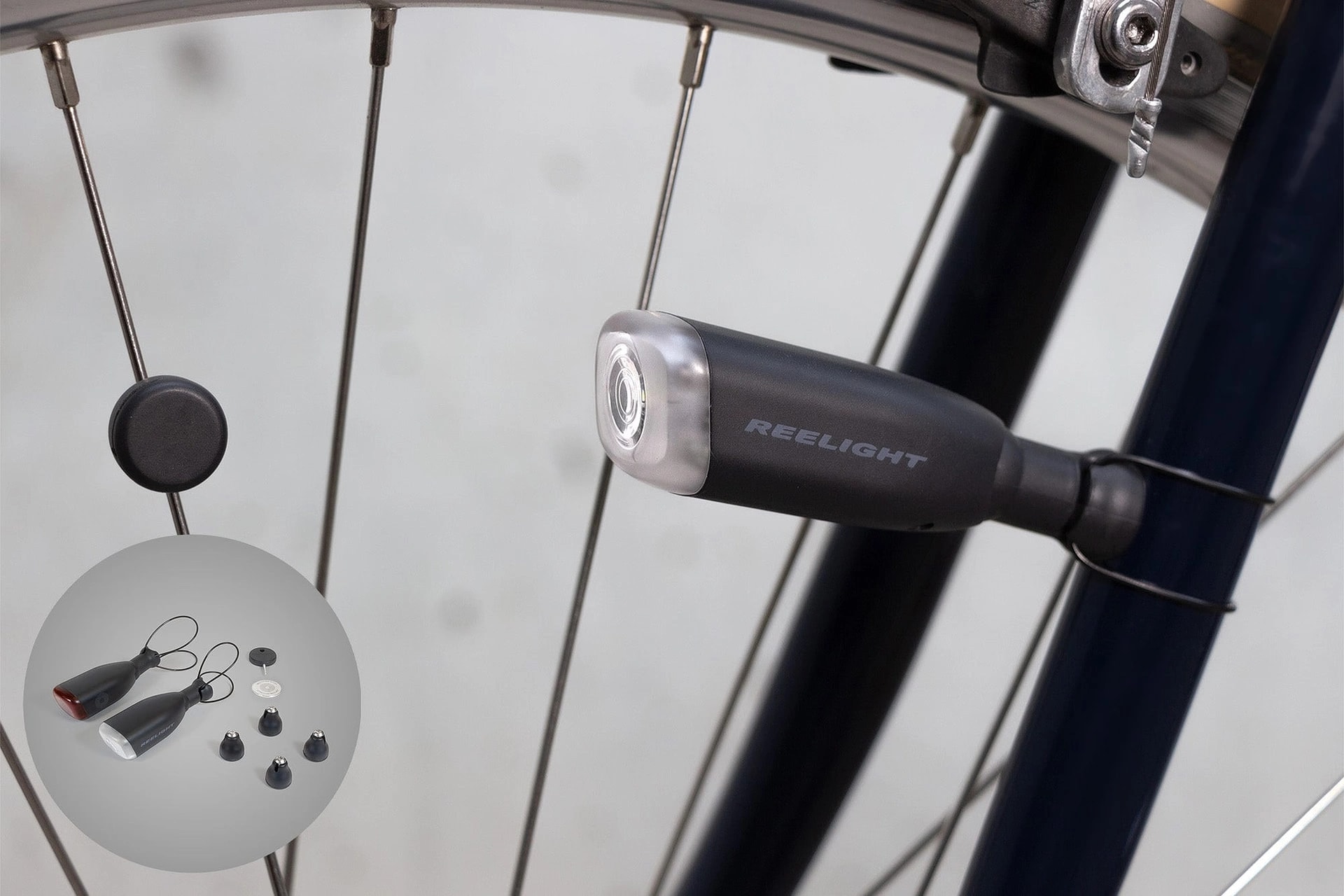
Make visibility part of the pedal stroke.
Both integrate a function into a bicycle through a physical mechanism. Leaf springs provide movement at the fork; induction generates electricity for lights while riding.

Change the stream before asking for less water.
Both focus innovation inside a small component of a familiar system. Suspension behaviour and water delivery must be judged in the task the component actually serves.