Connect surplus with somewhere useful.
A shop has food it cannot sell. A community group could use it. The missing piece is often a workable handoff: the right food, an agreed time and someone able to collect.
 IE Ireland
In practice. An operating redistribution model connects food businesses and charities through collection arrangements and warehouse routes.
What to keep in view
Redistribution depends on suitable food, capable recipients and reliable handling. Quantities redistributed do not by themselves establish reduced overproduction, improved nutrition or a good experience for every recipient.
A notification has to become a collection
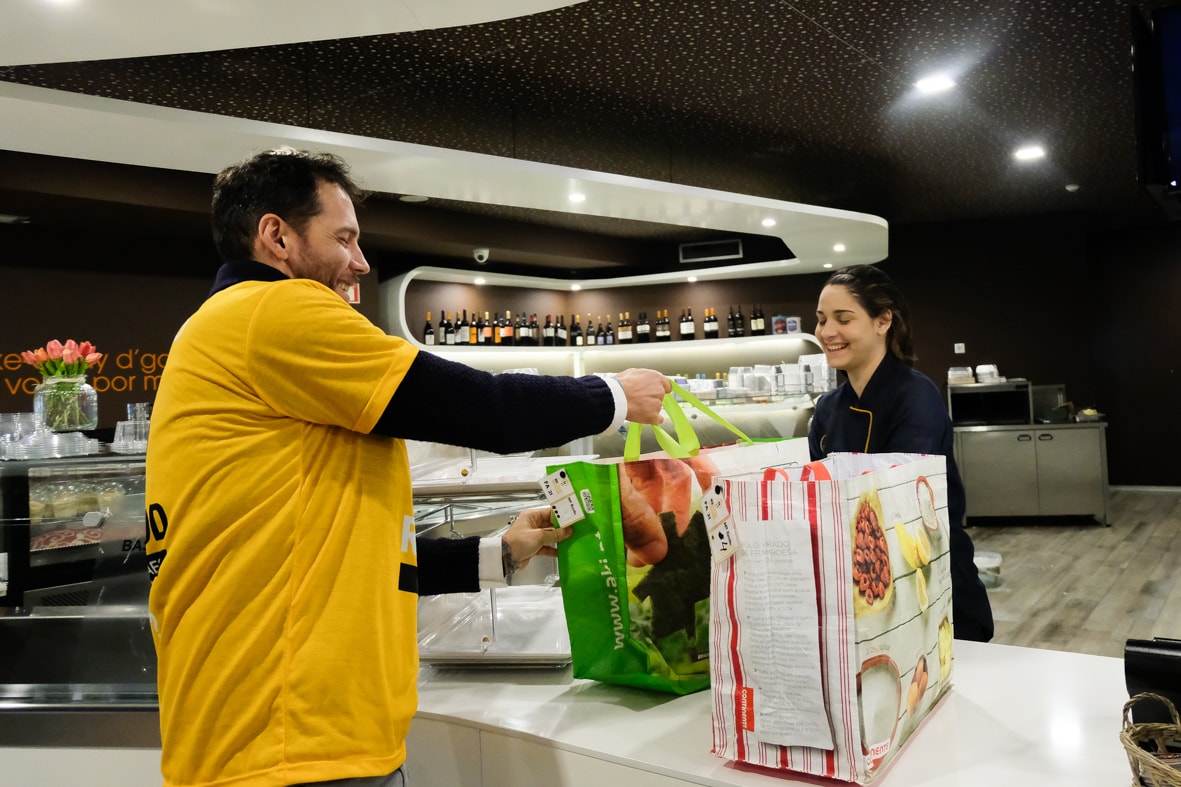
In FoodCloud’s direct route, a business posts available surplus and a collection time. A connected charity or community organisation can accept an offer that suits it, then collect from the business. The app coordinates the exchange; it does not move or store the food.
FoodCloud’s guidance describes agreeing collection days and times during onboarding. That turns a promising match into something people can plan around. The receiving organisation still needs the capacity to handle what it accepts.
A different route for a different volume
FoodCloud also operates regional hubs in Dublin, Cork and Galway. Food businesses can send surplus into these facilities, where it is recorded and stored before partner organisations arrange collection or delivery.
This route adds a physical distribution layer. It can connect supplies and organisations that would not be served by a single local pickup. It also brings the work of storage, transport and order preparation into the service.
Receiving is a choice, not an obligation
FoodCloud’s published process allows a partner to accept or decline a direct offer. Its guidance also allows refusal at collection when food is unsuitable. That detail matters: a donation is only useful when the organisation can safely handle and use it.
Our reading: the innovation sits in making the handoff dependable while keeping room for the recipient’s needs. Redistribution can recover value from edible surplus, but it does not replace preventing avoidable surplus or establish that every delivery meets nutritional needs. The quality of the match matters alongside the quantity moved.
Read next.

Reuse with a proper shopfront.
Keeping things useful requires an organised route to the next user. Compare a permanent reuse marketplace with food redistribution.
Give surplus food a short route to someone who needs it.
Both connect surplus food with redistribution. Compare neighbourhood volunteer routes with a wider coordination platform and hub network.