A small robot with a lot to coordinate.
A mechanical bee is striking on its own. Making several fly together exposes a more demanding problem: each machine must know where it is, how it behaves and where it should go next.
 DE Germany
In practice. An indoor flying demonstrator presented in 2024, using installed positioning anchors and centrally planned flight paths.
What to keep in view
This is an indoor demonstrator with central path planning and installed positioning anchors. It does not establish outdoor autonomy, pollination capability, commercial availability or independent collective decision-making.
Light enough to fly
Presented for Hannover Messe in 2024, BionicBee is a flying demonstrator from the Bionic Learning Network at Esslingen-based Festo. It weighs around 34 grams and has a 240-millimetre wingspan. The small body contains motors, a battery, control electronics and the mechanism that drives its wings.
Festo describes using generative design to reduce material while retaining the required structure. The resulting object makes several engineering choices visible at once: weight, stiffness, motion and control have to fit inside the same tight allowance.
A swarm with a room behind it
The documented system flies indoors using ultra-wideband positioning anchors. Individual units calculate their positions, while a central computer specifies the paths they follow. The formation therefore depends on both the robots and an equipped environment.
A calibration flight helps account for differences between handmade units. Festo also describes the need to consider air disturbance from neighbouring robots. Coordinated flight involves managing variation and timing, as well as producing enough lift.
What the demonstration teaches
Our reading: BionicBee is most interesting as an explanation of a system. The visible flying object is only one part; positioning, planning and calibration make the group performance possible. Understanding those dependencies makes the achievement more specific.
It is a research and engineering demonstrator, not an established outdoor working swarm. A practical application would need its own evidence about endurance, useful payload, reliability and the infrastructure it requires. The next question is which task would justify the complete system, beyond the spectacle of flight.
Read next.
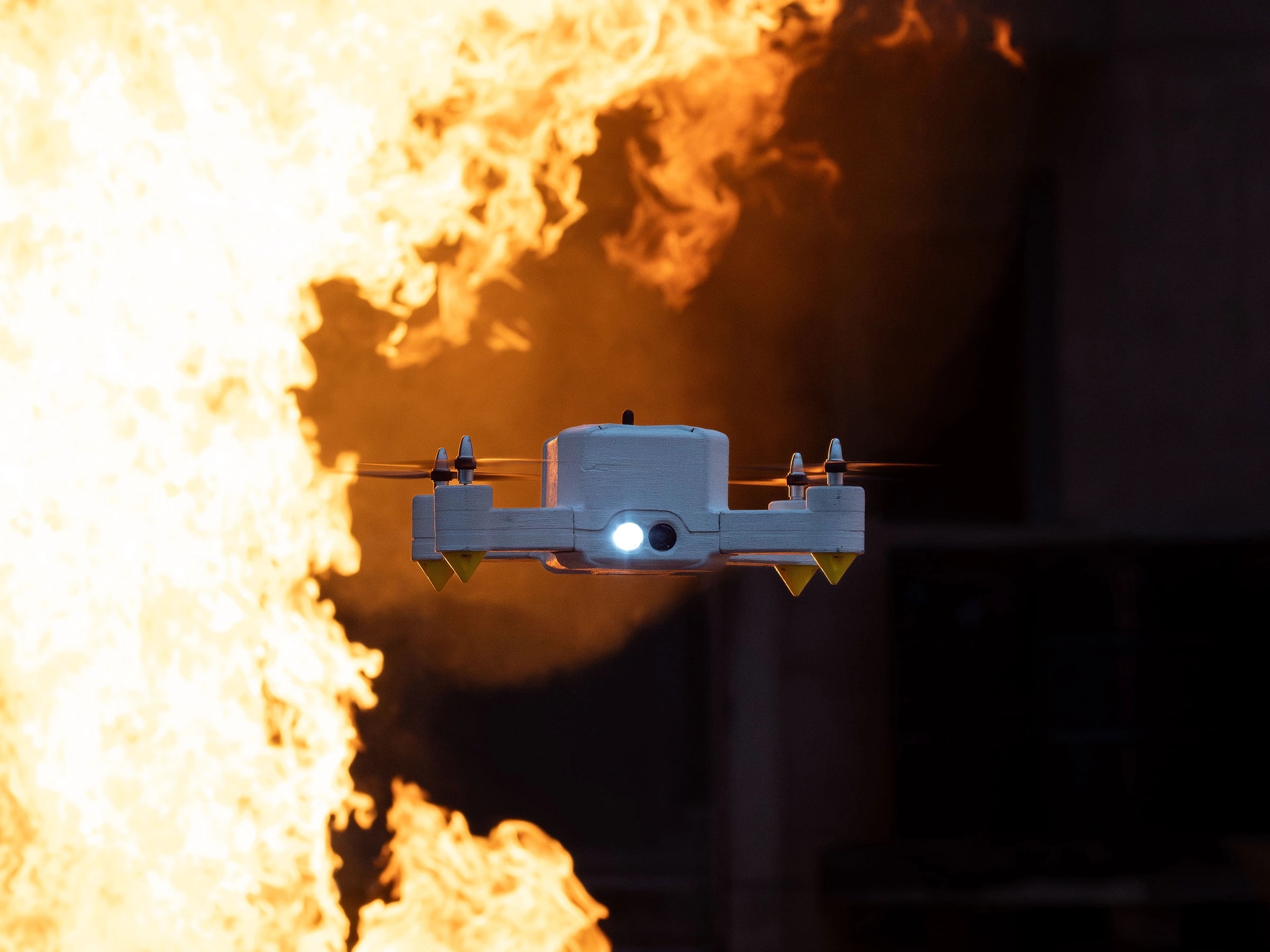
A drone built around a hostile environment.
Both redesign the flying system around a demanding role. Specialist heat protection and coordinated lightweight flight solve different problems.
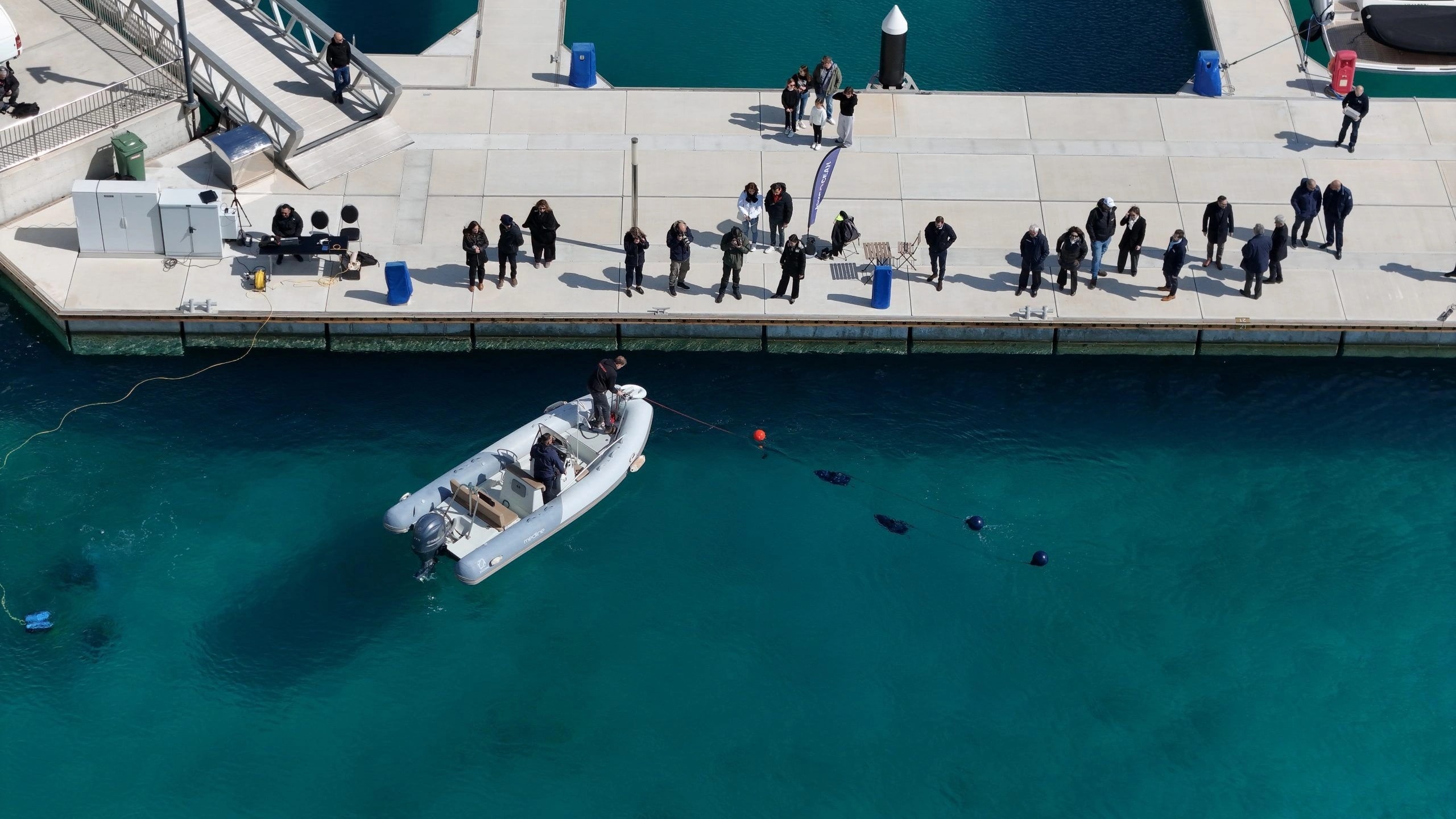
Explore how underwater robots could stay on site.
Coordinating small machines is central to both. An indoor flying demonstration and an underwater swarm face different sensing, communication and recovery constraints.