A rigid surface learns to fold.
A wooden surface can behave more like cloth. WOOD-SKIN connects rigid facets through a flexible layer, allowing flat material to fold into complex three-dimensional forms.
 IT Italy
In practice. An Italian composite-surface technology developed as WOOD-SKIN; the company now presents its work under Presentform.
What to keep in view
The folding behaviour belongs to a composite assembly, not to solid wood alone. Substrate, joints, fire performance, installation and recycling depend on the specified product.
Make the joints part of the sheet
Cut rigid elements remain linked by a flexible textile structure. The pattern of facets and joints determines how the surface can bend and form architectural panels. Digital design and fabrication connect the intended geometry with the manufactured sheet. The company now uses the Presentform name; WOOD-SKIN identifies the original technology discussed here.
Put flexibility in the connections while retaining rigid surfaces where they are useful.
Shape through a connected pattern
Our reading: flexibility need not come from making the entire material soft. It can come from deciding precisely where rigid parts remain separate and how those parts stay connected.
Read next.
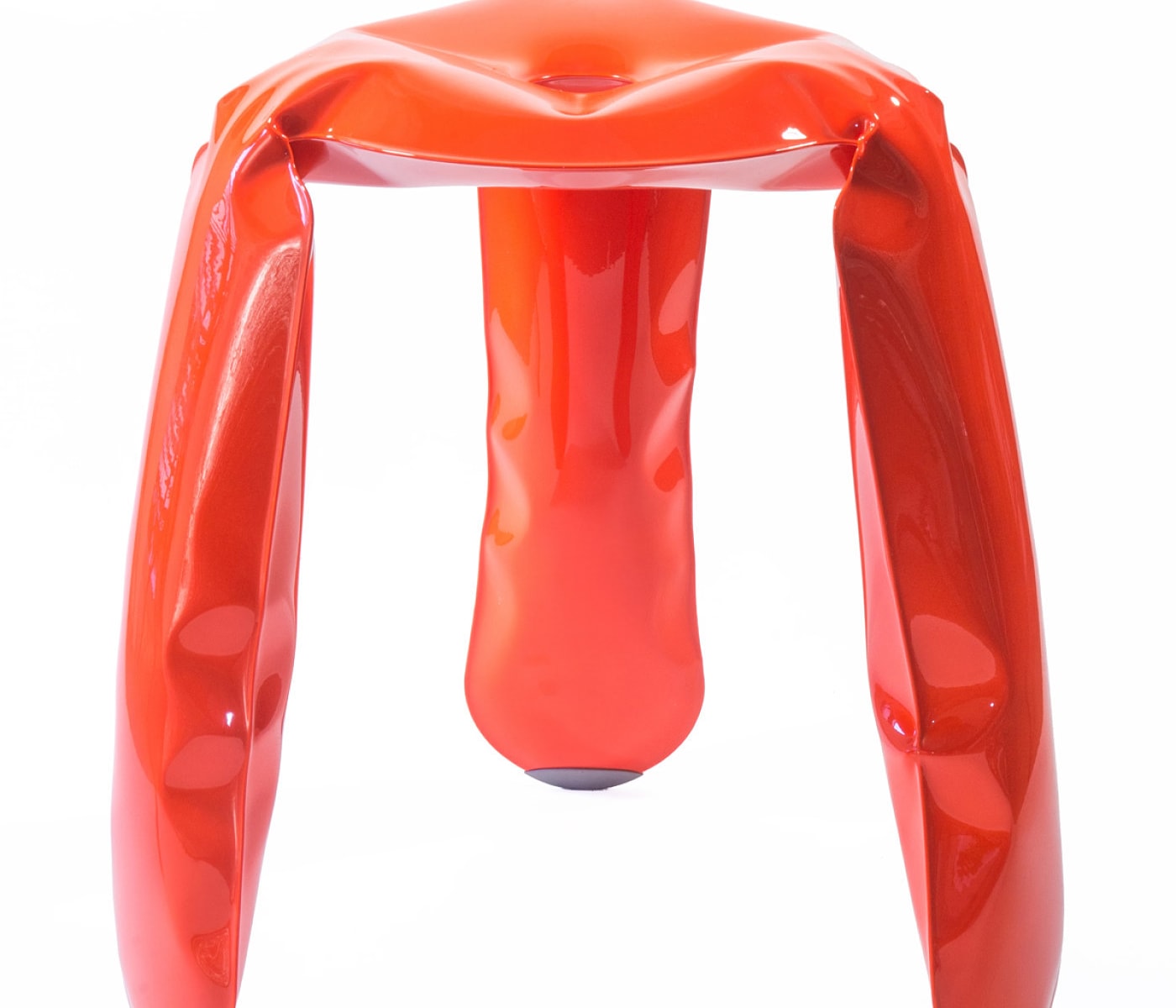
A stool shaped by pressure.
Both make an apparently rigid material take an unexpected form. Folding joints and pressure-driven shaping use different physical principles.
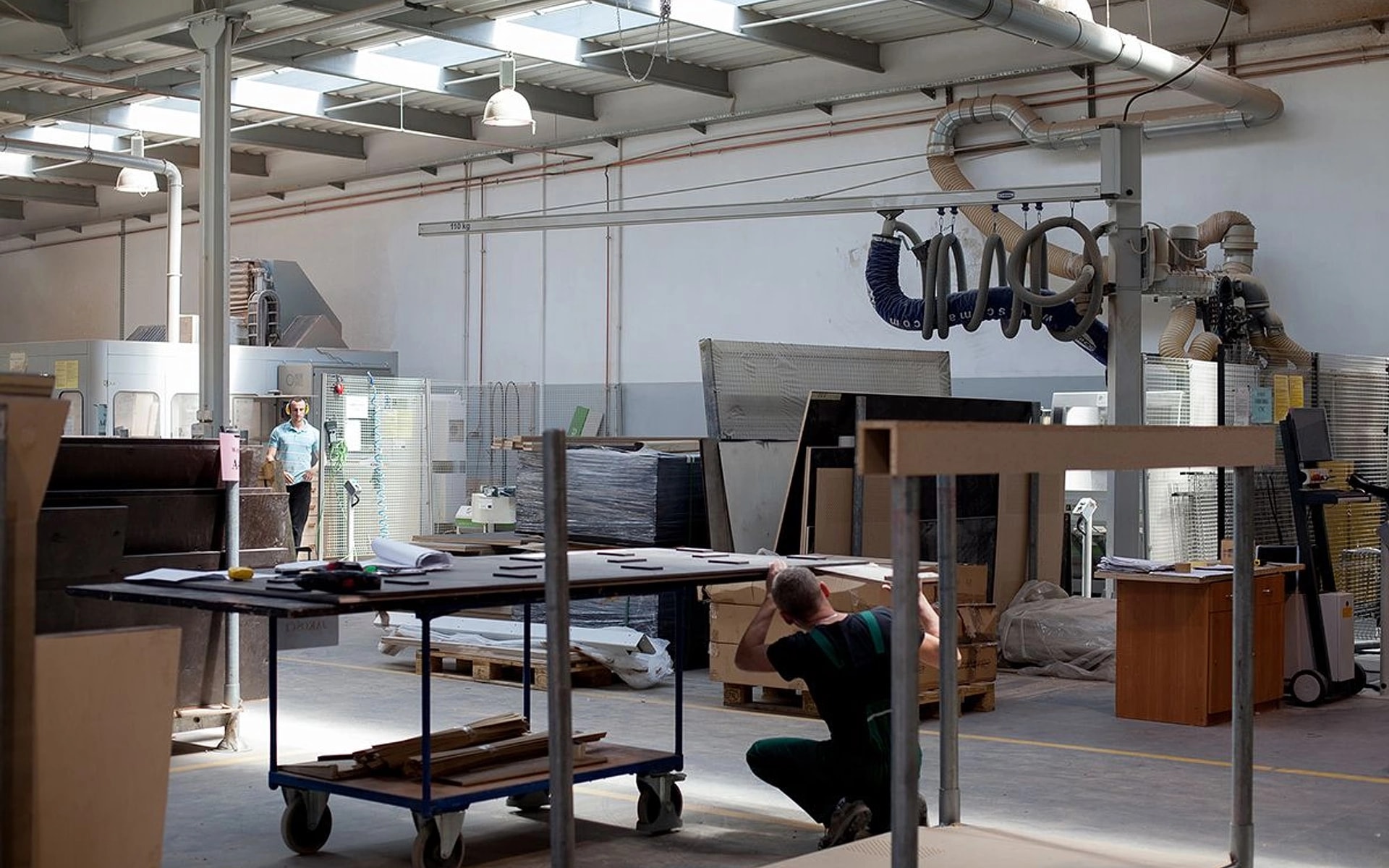
Let the furniture fit before it is made.
Both keep variation within a designed manufacturing system. Compare a folding surface with configurable furniture made to an individual order.