Make the roof a source of shade and power.
From the park, the building becomes a hill. Above it, an exceptionally thin-looking canopy supplies shade and carries a large photovoltaic installation.
 GR Greece
In practice. Renzo Piano Building Workshop and Greek collaborators completed the cultural centre in Kallithea in 2016, bringing together the national library, opera and a public park.
What to keep in view
The photovoltaic canopy contributes electricity; this entry does not claim that the whole venue is continuously self-sufficient or carbon neutral.
Give one surface several jobs
The canopy sits above the cultural complex and carries photovoltaic cells. Its structure uses an assembly of precast elements supported on slender columns, producing an appearance much lighter than its actual mass.
Below, a gently rising landscape covers parts of the building and leads visitors towards views of the city and sea. The project makes access to a roof into part of a public route instead of reserving the upper surface for technical equipment alone.
Connect the architectural experience with infrastructure
The project links a shaded upper level, cultural facilities, gardens and energy generation. The canopy is not an applied decorative symbol of sustainability; it performs specific physical tasks.
Its design accounts include projected electrical production. Those figures should be read as design expectations unless supported by operating data for a stated period. The broader lesson is the coordination of several useful functions within the same architectural element.
Read next.
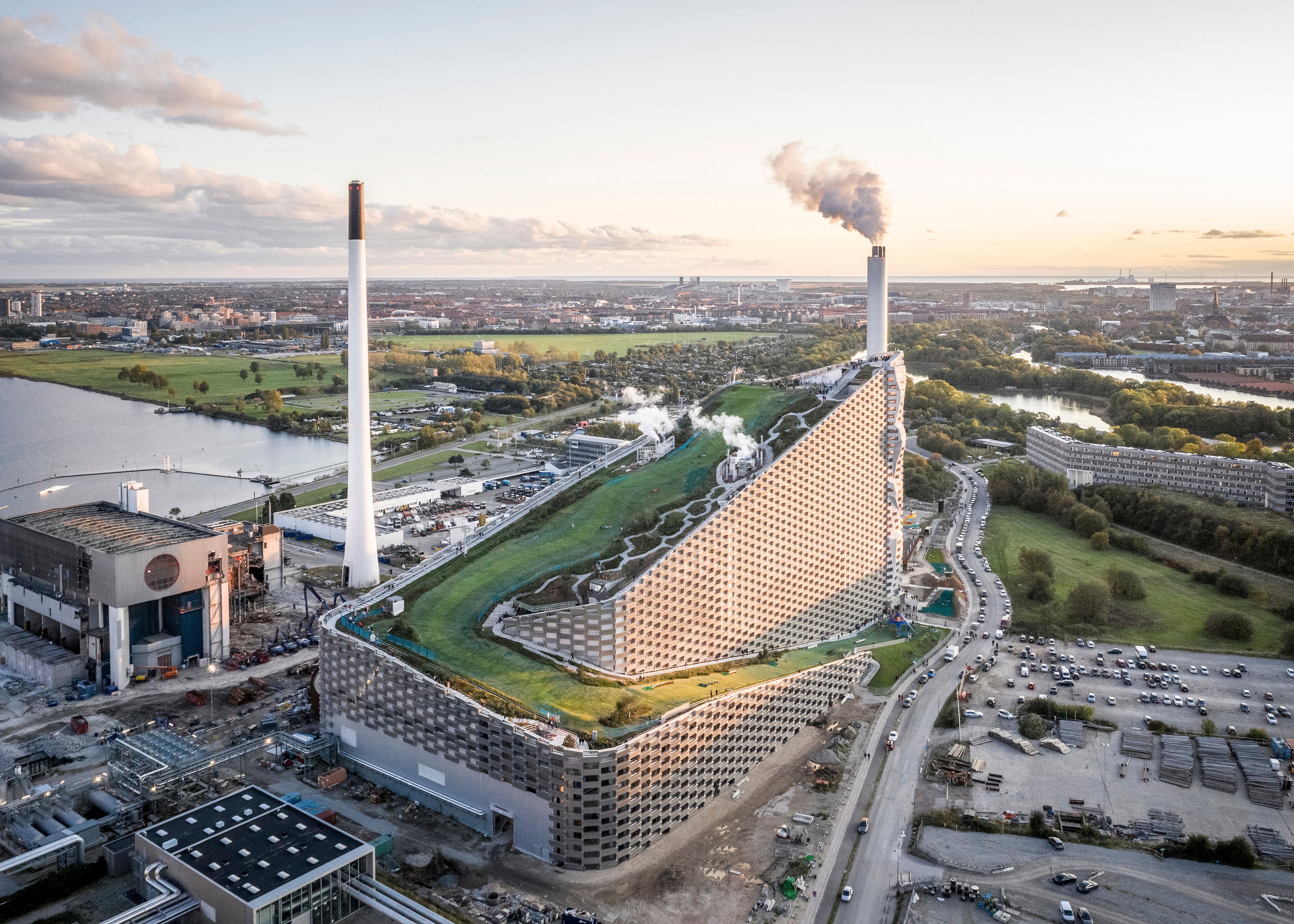
Ski on the city’s infrastructure.
Both give infrastructure an additional public role. Compare energy generation above cultural spaces with recreation on an energy plant.
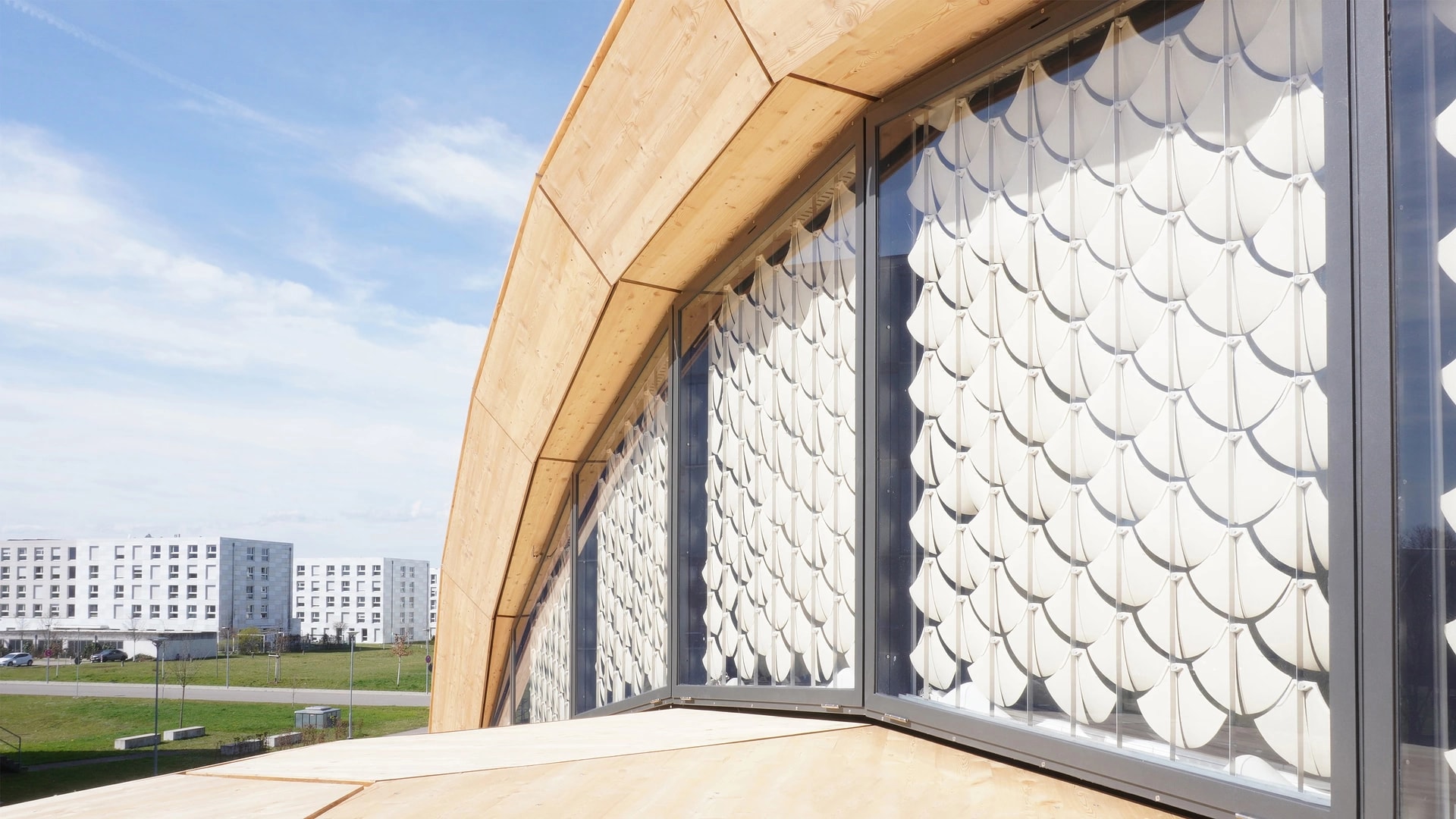
A façade that responds without a motor.
Both make an architectural surface respond to environmental demands. One coordinates shade and photovoltaics; the other uses material movement.