Make discarded plastic worth keeping.
A recycled panel need not imitate a new material. Recycline makes the colour and texture of recovered plastic part of the reason to keep the finished object.
 MD Moldova
In practice. A small-scale design and production workshop in Chișinău, working with collected HDPE and polypropylene and documented by UNDP as part of Moldova’s circular-economy experiments.
What to keep in view
This is a small-scale production case. The sources do not establish an independently audited lifecycle advantage or a complete collection-and-recycling loop for every product.
Turn a collection stream into a material
Recycline works with separately collected HDPE and polypropylene. Plastic is sorted, shredded and heated before being pressed into sheets. The workshop cuts the panels into components, finishes their edges and assembles furniture and other objects.
This sequence makes sorting a design decision. The plastic type affects processing, while the colours of the collected material become the visible pattern of a sheet. A dependable result requires attention to the input as well as to the shape of the finished product.
Give the second life a reason to last
The workshop’s furniture makes recycled content tangible without relying on a label alone. But novelty is only the first test. An object also needs to be useful, stable, cleanable and repairable enough to remain in use.
The broader lesson is to connect collection with a product people actually want. The relevant measure is not just how much plastic enters a press, but how much useful service the resulting material provides before its next end-of-life decision.
Read next.
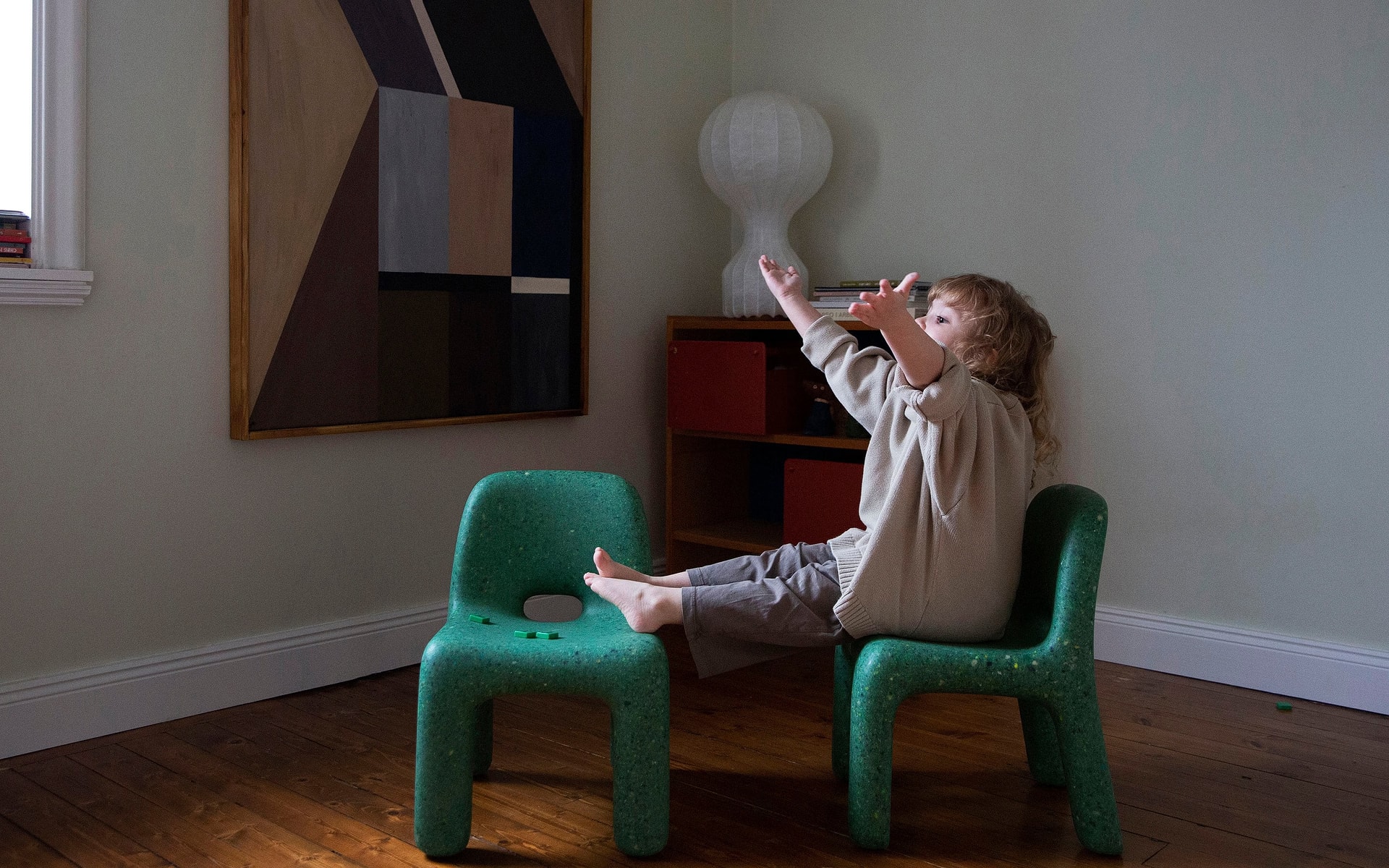
Old toys. A new place to sit.
Both make recovered plastic into furniture whose material history remains visible. Sorting and consistent processing are part of the design.
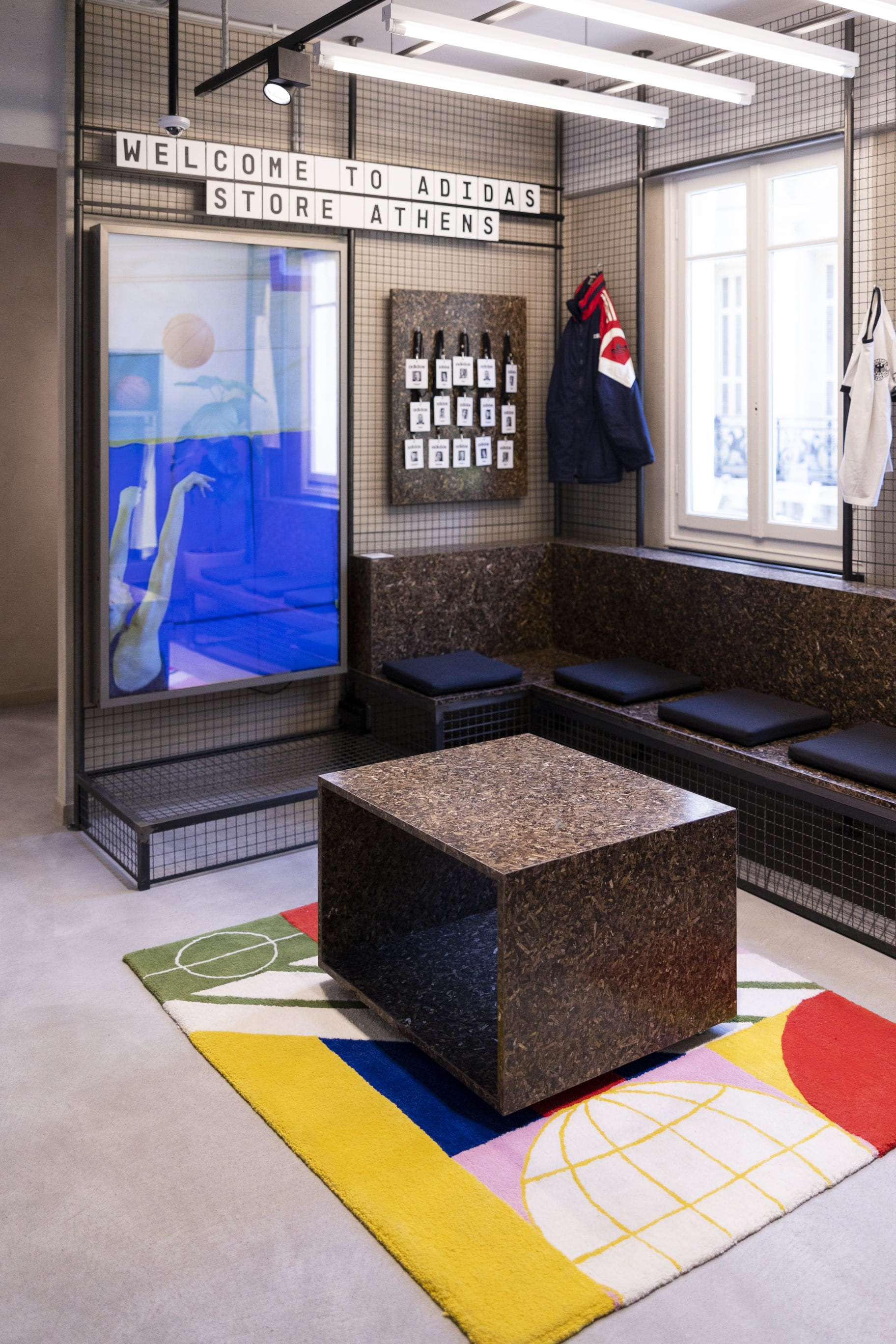
Seagrass, visible in the surface.
Both turn an overlooked material stream into a panel. Different feedstocks create different processing and end-of-life questions.