Make the connections inside a synthesiser visible.
Move a block and the music changes. Reactable turns a tabletop into a synthesiser, with physical objects and projected connections making a normally hidden musical system visible and shareable.
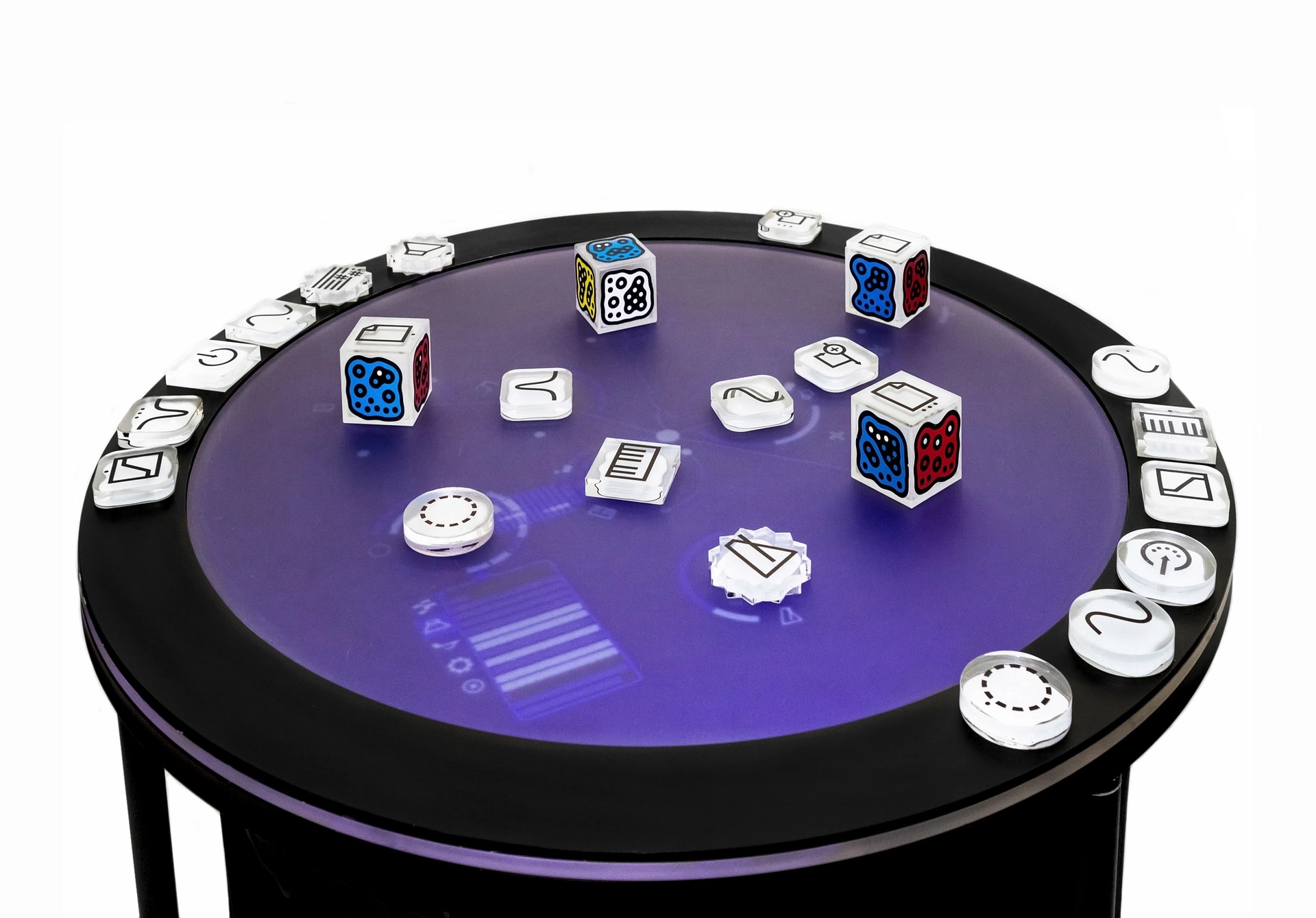
In practice. A Barcelona-developed historical product system. Reactable says Live and Experience are no longer sold.
What to keep in view
Reactable no longer sells the Live and Experience systems. This is a historical product-system reading, not a recommendation to buy a currently supported instrument. Physical visibility does not eliminate the need to learn synthesis. Legacy software and hardware support are explicit constraints.
Physical objects, digital relationships
Objects placed on the illuminated surface represent musical functions. Their position, rotation and relationships alter synthesis or playback, while projected graphics show the connections. The table combines tangible controls with software and computer vision, rather than producing sound acoustically inside the blocks.
Make the relationships inside a digital instrument physical, visible and shared.
Let the audience read the instrument
Our reading: a synthesiser can be difficult for an audience to read. Reactable makes the performer’s actions and the system’s relationships visible, opening the instrument to co-play and public understanding without reducing it to a row of buttons.
Expose the relationships between elements of a system, not just separate controls for each element.
Sources (4)
- Reactable · Live system components, musical controls and legacy notice
- Reactable · Collaborative table interaction and exhibition system
- Universitat Pompeu Fabra · University research origins and development
- Universitat Pompeu Fabra · Reactable research start in 2003, concert premiere in 2005 and commercial spin-off in 2009
Read next.

A softer way to take the floor.
Both make an interaction visible in a shared room. One changes how people take a speaking turn; the other exposes relationships inside a digital instrument.

A musical idea, made visible.
Both make musical structure visible through objects. Reactable tracks relationships on a surface; Musicon sequences actions around a drum.