The sea can heat a neighbourhood.
Monaco uses seawater as a thermal resource for heating and cooling, connecting coastal geography with the everyday needs of buildings.
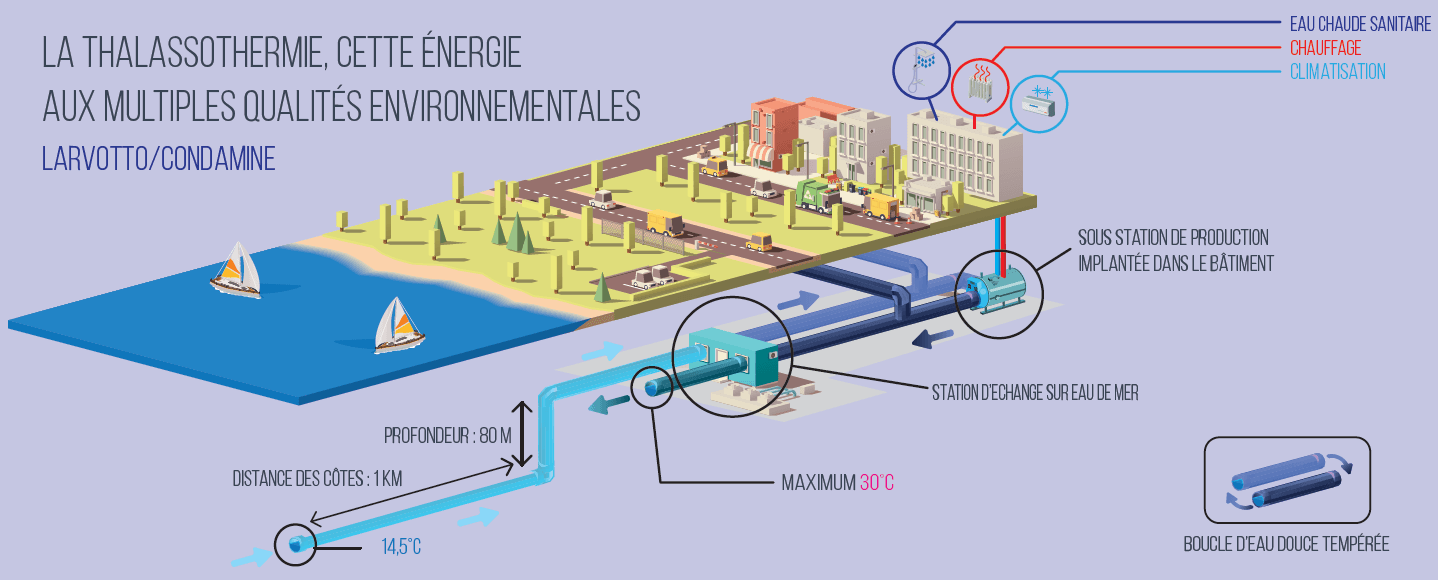
In practice. Seawater heat pumps and district loops supply heating and cooling in Monaco; the story distinguishes existing systems from planned extensions.
What to keep in view
Heat pumps still require electricity. Performance, marine effects and lifecycle emissions depend on the site and operation. Planned extensions and projected savings should not be presented as completed or independently measured results.
Use the temperature, not the tide
Seawater heat pumps have been part of Monaco’s energy systems for decades. Their role is to transfer heat, rather than generate electricity from waves. SeaWergie’s district loops connect that resource with buildings that need warmth or cooling.
The operator describes a seawater intake and heat exchange with a separate freshwater circuit. Heat pumps in connected buildings use that circuit as a source or sink, depending on the season and the service required.
The network is part of the invention
The useful scale is a neighbourhood: shared infrastructure, building connections and long-term operation all have to work together. Monaco has an established Fontvieille network and has developed additional loops serving other districts. The operator also publishes ongoing extension works.
Our reading: a city’s local resources can become everyday infrastructure when engineering and coordination meet. Dense coastal areas offer a specific setting for this approach; the same system is not automatically suitable for every town beside the sea.
Read next.
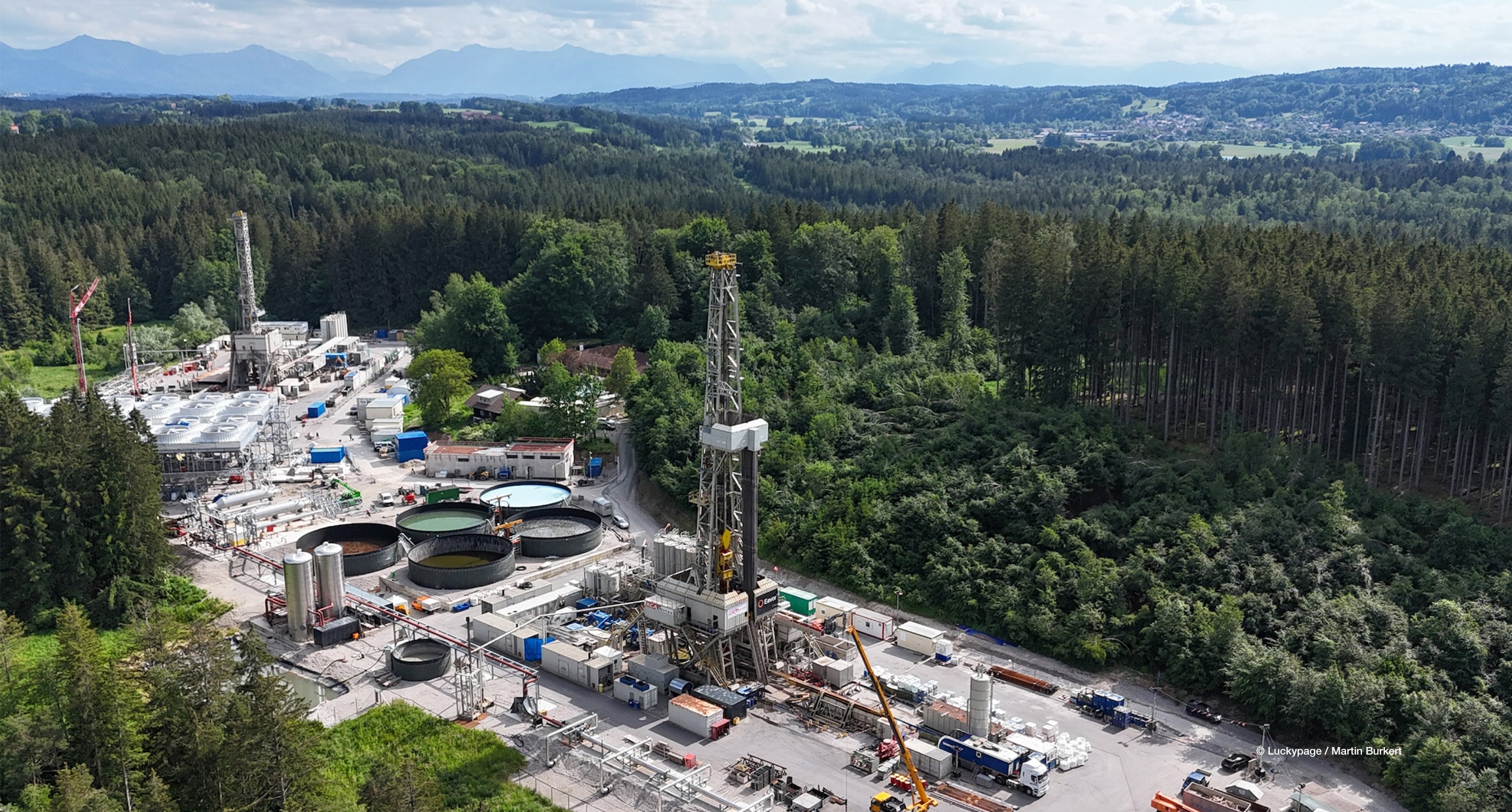
Geothermal heat, in a closed loop.
Both use heat from their surroundings. Compare a deep engineered loop with coastal heat exchange, and the infrastructure each setting requires.
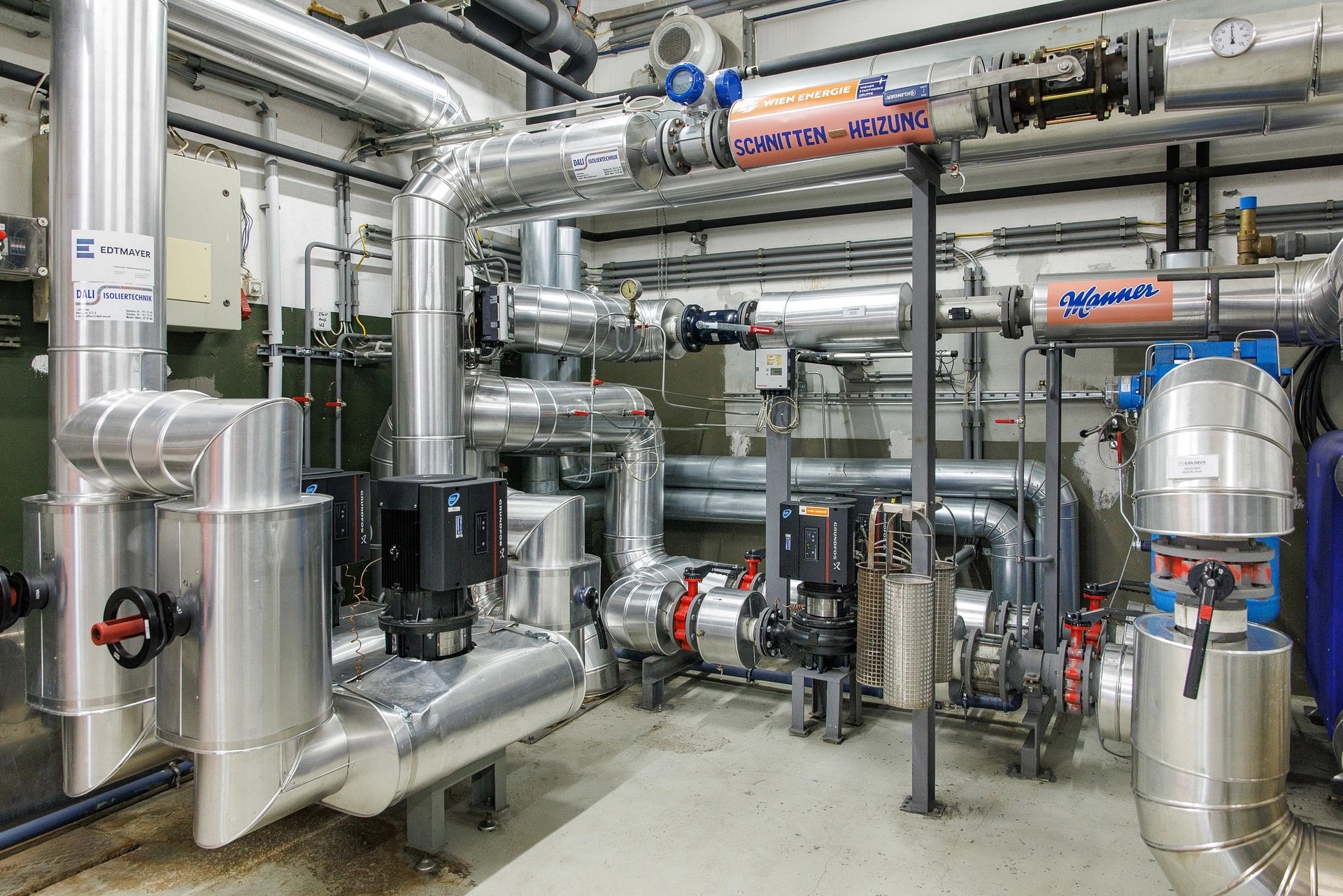
Baking heat, used twice.
Both connect a local heat resource to buildings. Compare recovered industrial heat with heat exchanged through seawater.