Make an ordinary key easier to grasp and turn.
The lock works. The key fits. The difficulty is the small piece of metal between the fingers. Keywing enlarges that point of contact.
 GB United Kingdom
In practice. A commercial key attachment by London-based designer Geoff Rolandsen, launched in 2019.
What to keep in view
Fit, grip strength and key geometry vary. The attachment will not suit every key or every user’s needs.
It began at a shed door
London-based designer Geoff Rolandsen describes watching his father struggle to unlock a shed as his dexterity deteriorated. The problem was an ordinary action that had become difficult. His response was an attachment for the key, rather than a replacement for the lock.
The earlier Workey prototype received Design Council Spark support and investment from Versus Arthritis. Keywing’s own launch account dates its introduction to 27 March 2019 and describes testing with supporters of the charity.
Grip and turning are two parts of the task
Clipped around the head of a compatible key, the attachment offers a broader contact area and a longer lever. That changes both where the fingers can hold and how they apply a turning action. The key still operates the existing lock.
Our reading: this is a useful example of locating the difficulty precisely. A small change at the contact point can preserve the familiar object and routine. It is not evidence that one shape suits every hand: compatibility, available space around the lock and the user’s grip still matter.
Read next.

A softer way to take the floor.
Both redesign the contact between a person and an existing tool. A soft enclosure changes how a microphone travels; a wing changes how a key turns.
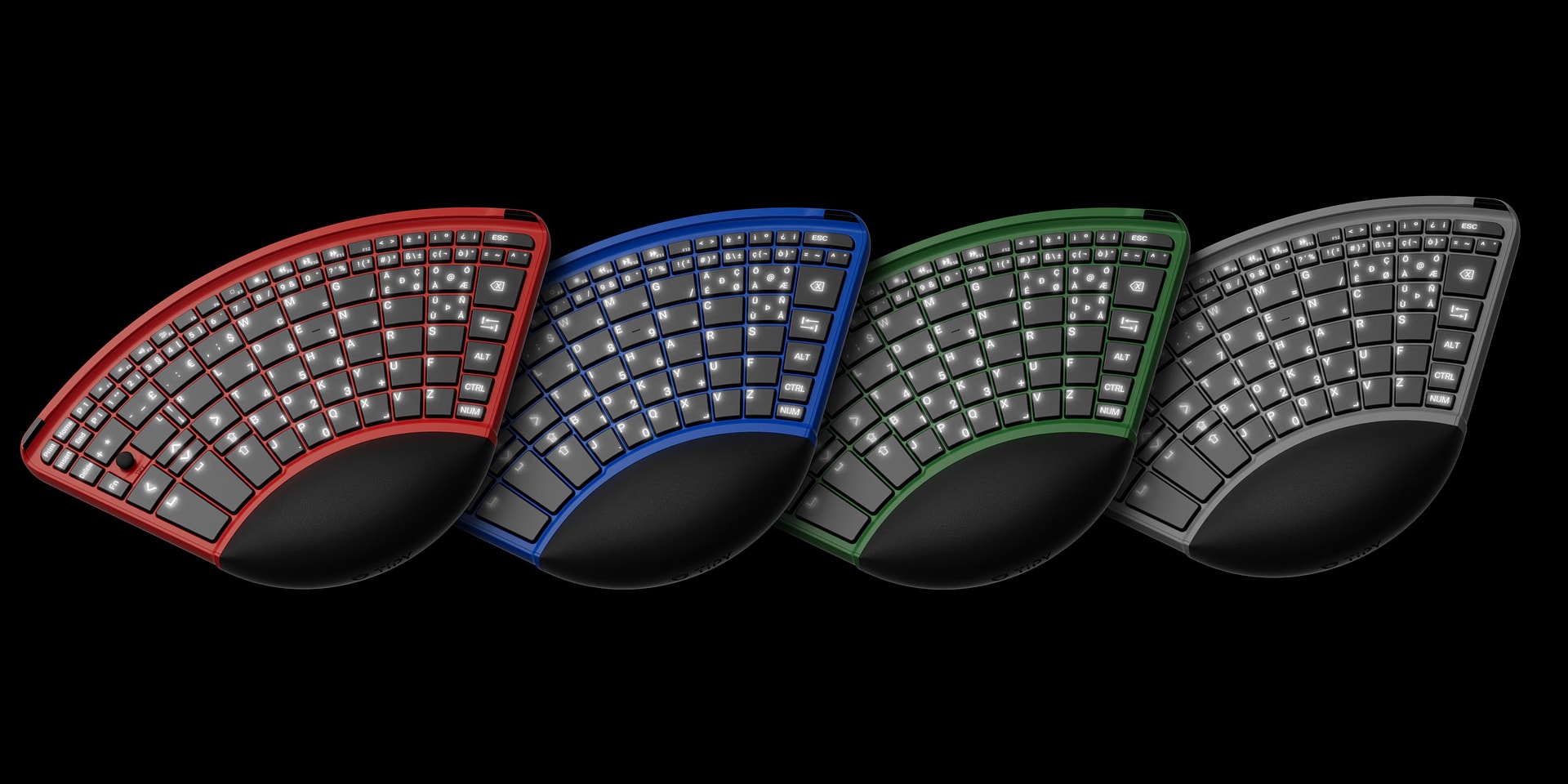
One hand. A whole keyboard.
Both reconsider an inherited interface around the user’s movement. Changing the contact point can be more focused than replacing the wider task.