Give an island its own route to drinking water.
For an island, water infrastructure is also a question of independence. At Ħondoq, seawater is treated on Gozo itself instead of relying only on supply from the neighbouring island.
 MT Malta
In practice. Water Services Corporation inaugurated Gozo’s first reverse-osmosis plant in November 2021, with a stated design capacity of 9,000 cubic metres per day.
What to keep in view
Desalination still consumes electricity and produces a concentrate stream. Design capacity is not a claim of continuous output, and announced expansion is not counted as completed capacity.
Recover pressure within the process
The plant draws seawater through beach wells and treats it through a membrane process. Pressure pushes water through membranes that separate it from much of the dissolved salt. Further treatment prepares the product water for the supply network.
Producing that pressure takes energy. The system therefore recovers energy from the pressurised concentrate stream rather than discarding all of it. Water Services Corporation’s impact reporting describes the plant’s specific electricity consumption alongside its role in Gozo’s water supply.
Measure the whole service
The useful outcome is not simply a membrane producing fresh water. It is a dependable local supply supported by intake, treatment, storage, monitoring and distribution. Building that capability on Gozo changes the geography of the service.
Energy recovery addresses one part of the burden of desalination. It does not remove the need to evaluate seawater abstraction, concentrate discharge and the source of electricity. Those conditions determine how well the technology fits its location.
Operator-confirmed infrastructure · Opened 20 November 2021
A desalination plant opened for Gozo
Malta’s Water Services Corporation records the opening of the Ħondoq plant on 20 November 2021, with a design capacity of 9,000 cubic metres per day.
What this tells us. Design capacity is not actual daily production. Energy use and marine discharge also matter when assessing desalination.
Read next.

Change the stream before asking for less water.
One creates a local drinking-water supply; the other reduces demand at the tap. Supply and use belong in the same resource conversation.
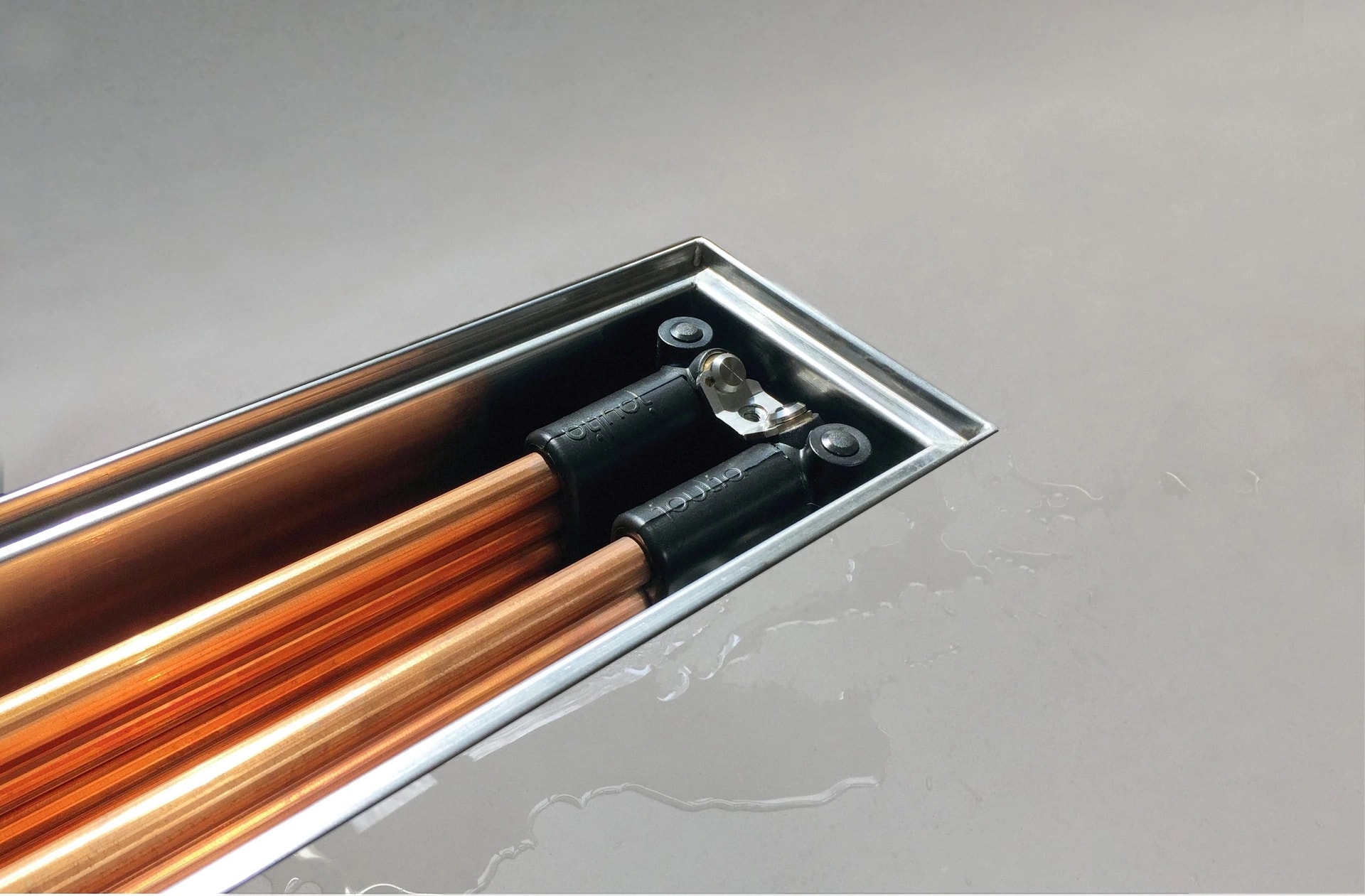
Recover the heat before the water leaves.
Both recover energy from a stream leaving a process. Compare pressure recovery in desalination with heat recovery in a shower drain.