An electric motor can be the sound source.
Eight electric motors become a musical instrument. Their changing speed supplies the pitch, and their acceleration becomes part of the performance.
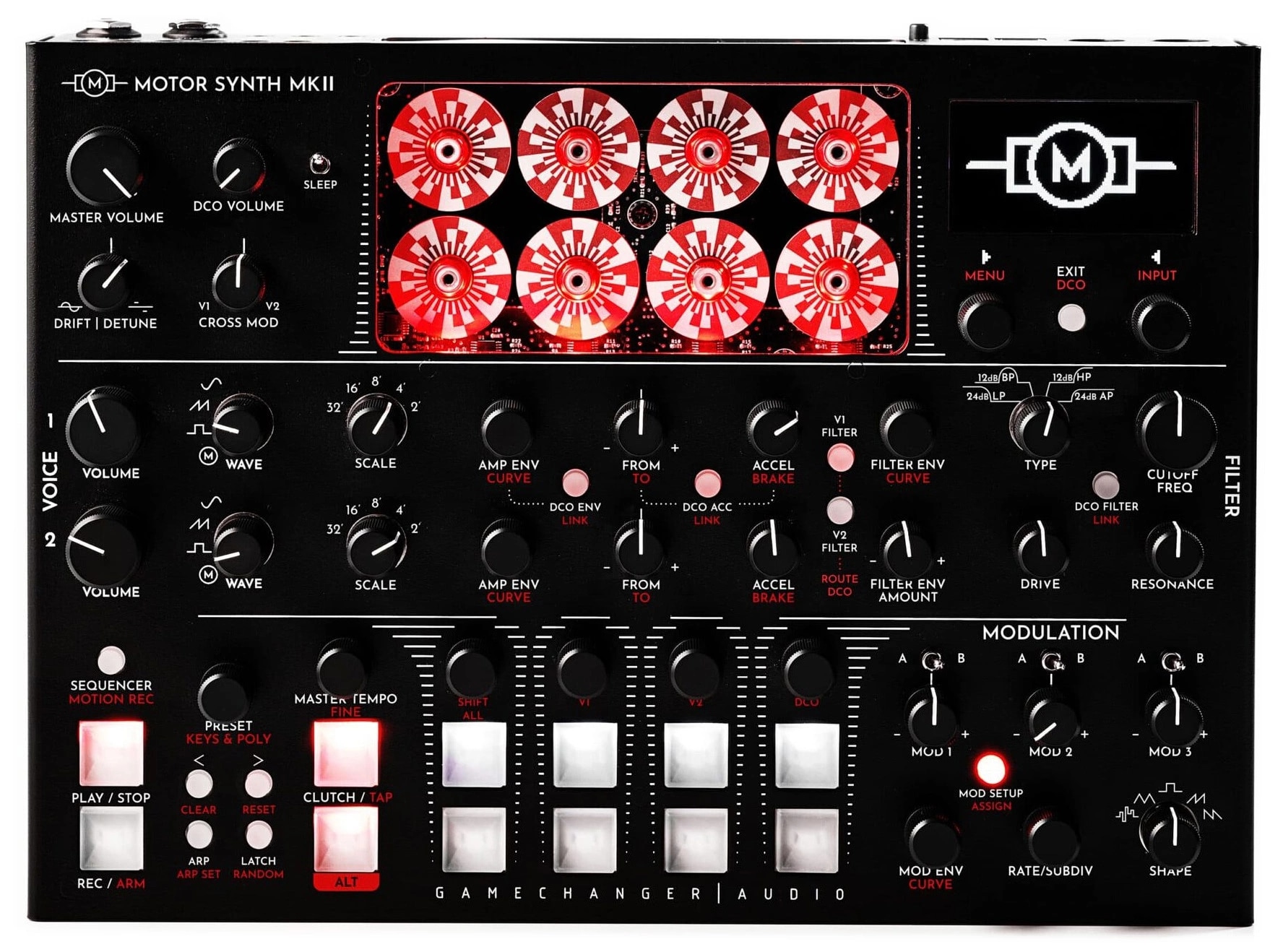
In practice. The Latvian MOTOR Synth MKII dates to 2022 and is distinct from the original 2019 model.
What to keep in view
This is the 2022 MKII, not the original 2019 model. Do not describe two four-note paraphonic voices as eight fully independent synthesizers. Different sound does not establish musical superiority or an acoustic instrument without amplification.
Turn rotation into a playable signal
Gamechanger Audio’s MKII uses eight brushless DC motors in two four-note motor voices, alongside a separate digital oscillator voice. Magnetic pickups and optical reading of patterned reflective discs turn rotation into electrical audio signals. The instrument exposes motor acceleration and braking as performance controls. Its motor voices are paraphonic: notes within a voice share parts of the sound-processing path.
Treat the behaviour of a moving component as expressive material, rather than something to hide behind a digital imitation.
Give physical behaviour an expressive role
Our reading: an electric motor is normally chosen to move something else. Here its changing speed becomes the reason to listen. The interest is not a claim that electromechanical sound is new. It is a contemporary instrument organised around the physical behaviour that ordinary product engineering often tries to smooth away.
Before eliminating a material behaviour as a nuisance, try exposing it as a controllable experience. Keep only the behaviours that users can understand and purposefully shape.
Read next.

New instruments for another medium.
Both create musical possibilities from physical behaviour. Water changes the performing medium; rotating motors become a controllable sound source.
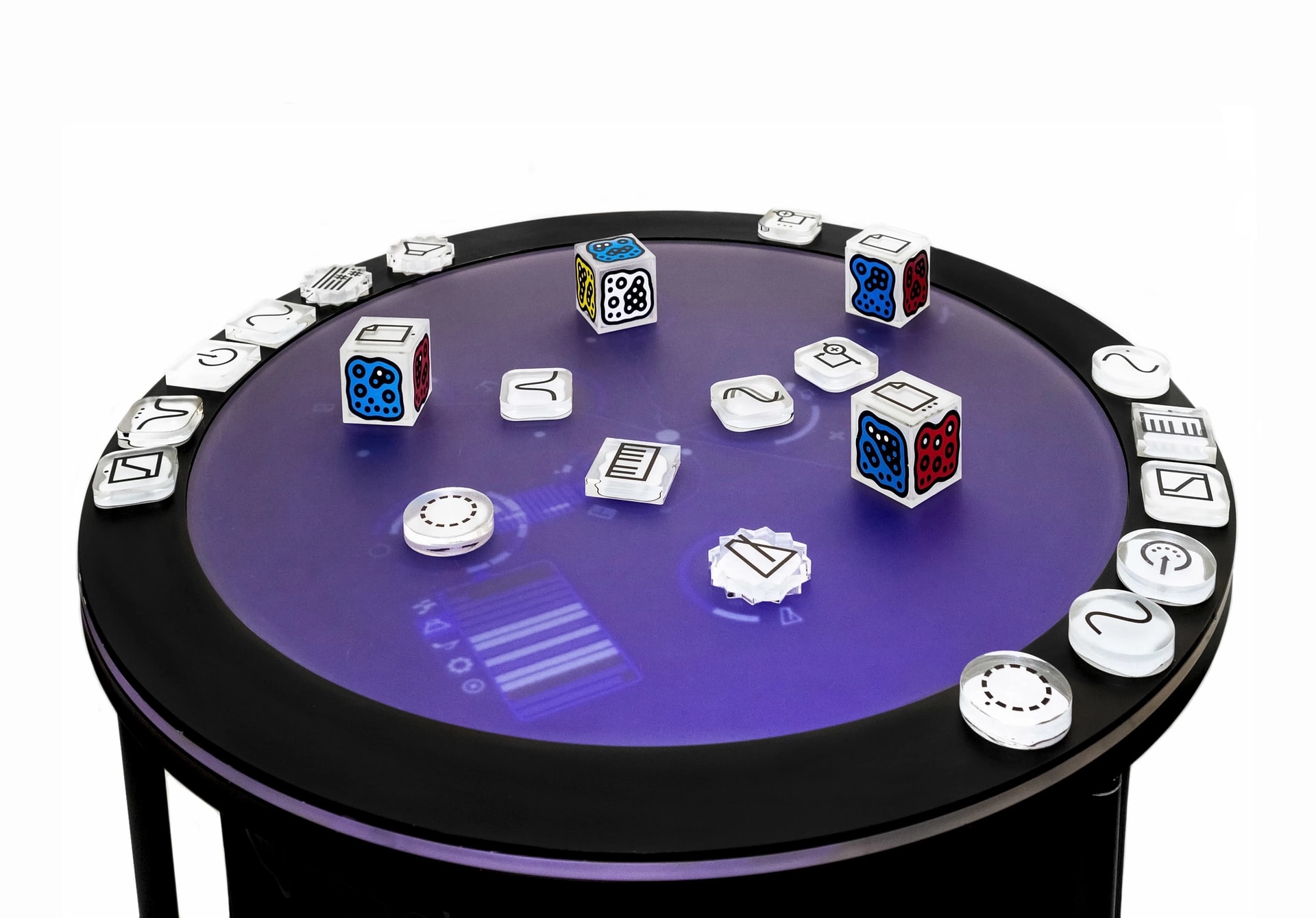
Music made by moving objects on a table.
Two instruments reveal their logic differently: rotating motors supply the signal, while tangible blocks control a software sound system.