A boat ride that turns a corner in the sky.
A canal boat enters a cradle of water, then rises as another cradle descends. At Falkirk, the spectacle begins with a quiet engineering decision: balance the loads before trying to lift them.
 GB United Kingdom
In practice. A working Scottish canal boat lift opened in 2002, forming part of the link between the Forth & Clyde and Union canals.
What to keep in view
The wheel is one part of the canal connection, which also includes locks. Balance reduces the lifting work; it does not eliminate power, maintenance or operating limits.
A half-turn, not a steep climb
One water-filled cradle rises while the opposite cradle descends. The cradles stay level as the supporting structure turns, so the boats travel with their water rather than being tipped through the rotation. Scottish Canals describes a half-turn taking five minutes.
The lift opened in 2002 as part of the connection between the Forth & Clyde and Union canals. The wheel is the spectacular moving element; locks and the connecting waterway complete the journey.
A CLOSER LOOKSee the wheel in motion
Follow the blue cradle.
The blue cradle starts at the lower level. Both cradles stay level.
Balance changes the work
A floating boat displaces its own weight in water. With water levels controlled, a cradle carrying a boat need not become heavier simply because the boat has entered. Opposing balanced loads reduce the lifting work, although the wheel still needs power and controlled operation.
Our reading: this makes a normally hidden engineering decision visible. Before asking for a stronger motor, ask whether another part of the process can balance the load. The moving structure also gives visitors a way to understand that decision.
Operating mechanism · Operator information
A half-turn takes about five minutes
Scottish Canals describes a five-minute half-turn that lifts and lowers boats between the two levels of the wheel.
What this tells us. This is the wheel’s rotation time, not the duration of the full canal journey or a boat tour.
Read next.
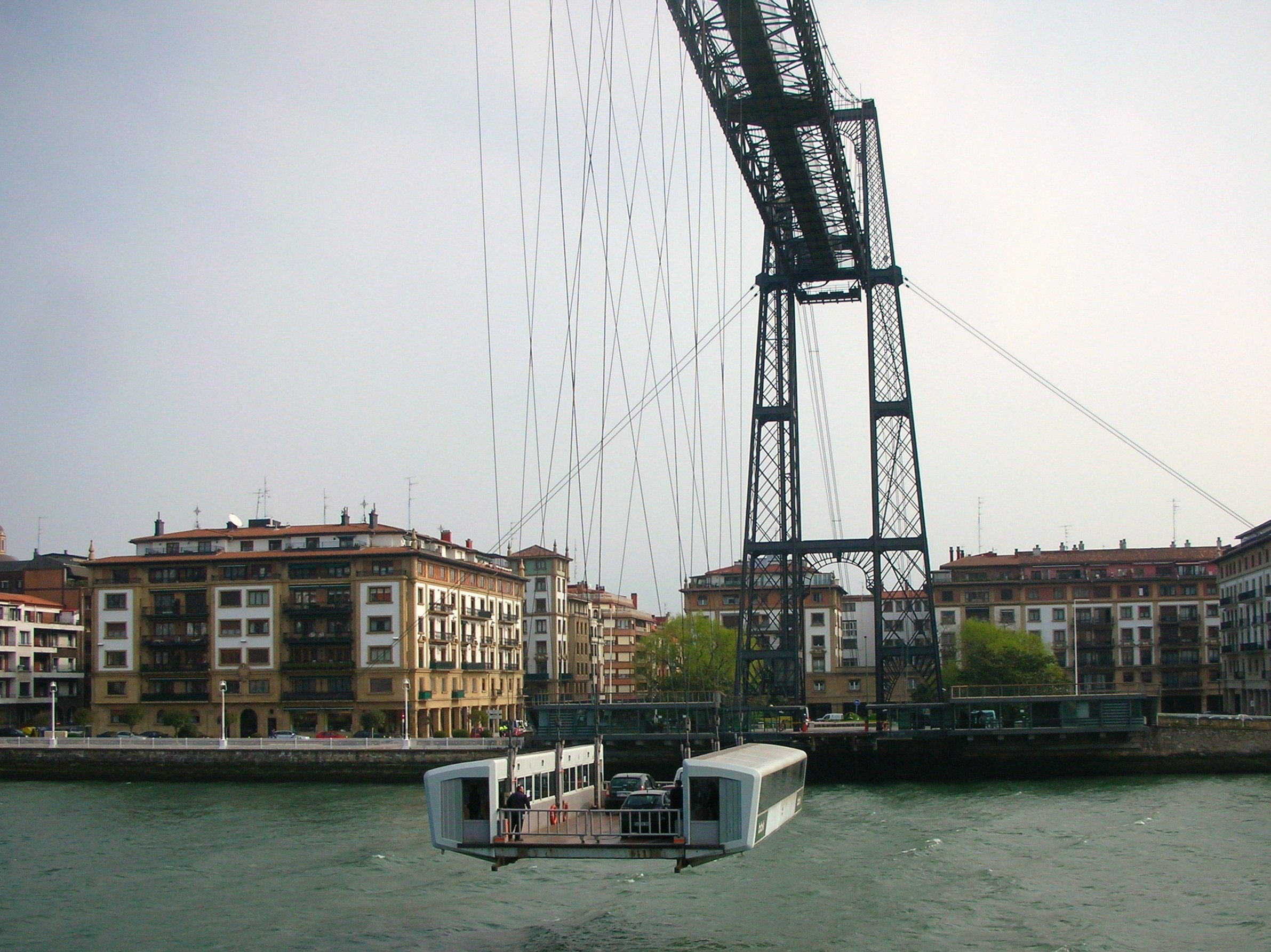
Cross the river without closing it to ships.
Both move a small travelling platform within a large fixed structure, resolving a waterway crossing without rebuilding the whole route.
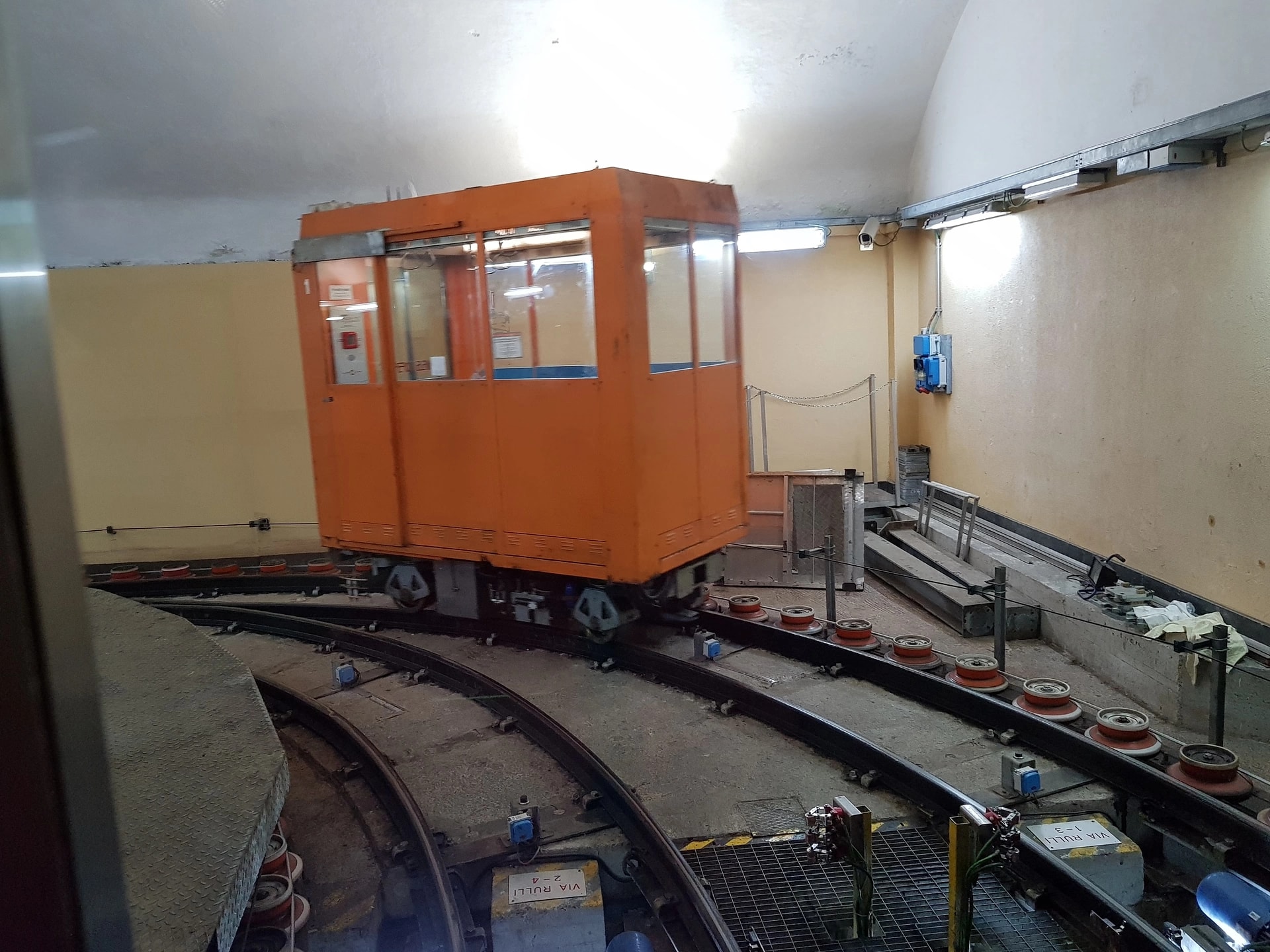
First across. Then up. In the same cabin.
A journey changes level without asking passengers to make a conventional transfer. Compare the balanced boat lift with Genoa’s two-direction cabin.