A little architecture, served by the slice.
The surprise is in the tool. A digitally designed mould lets pastry take on shapes that seem closer to architecture than a conventional cake.
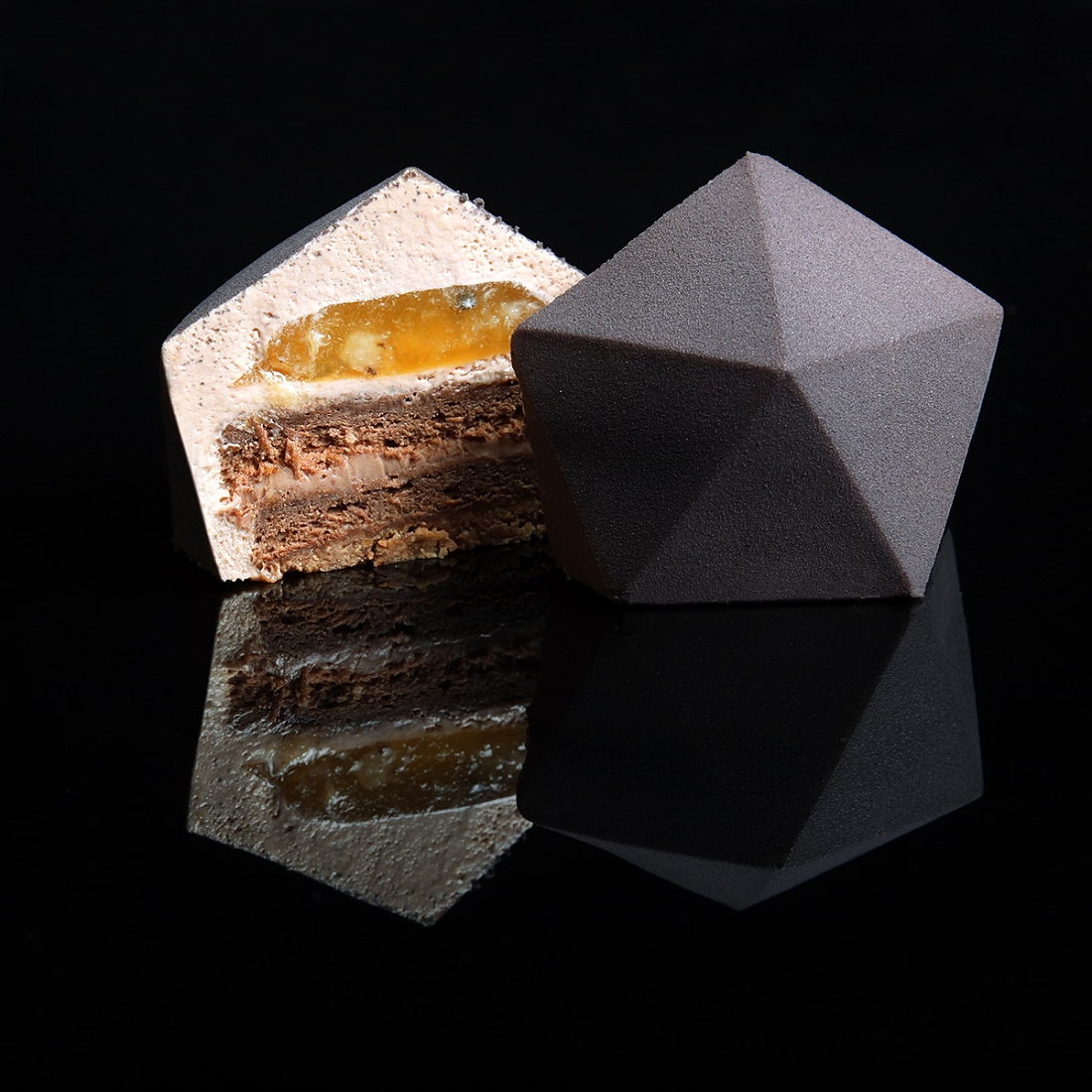
In practice. Documented pastries use silicone moulds developed through digital modelling and printed masters; the cakes themselves are not printed.
What to keep in view
These are mould-based pastries, not printed food. A visually successful cake does not establish that every geometry is practical for repeated production; release, assembly, taste and waste still matter.
From a model to a mould
For her Lime-basil Triangulation cake, Kasko documents a process involving three-dimensional modelling, printing and silicone casting. The resulting mould shapes the pastry; a printer does not produce the finished edible cake.
The cut surface reveals familiar layers inside an unfamiliar silhouette. The geometry changes how the dessert looks, while flavour, texture and assembly remain matters of pastry craft.
A new tool for an existing craft
Our reading: this is an approachable example of digital fabrication extending a skilled practice. The computer helps develop the form, while the maker still has to turn that form into something worth eating.
The same question travels beyond the kitchen: could a better jig, template or mould open up possibilities without replacing the craft itself? The most useful invention may be one step behind the object people finally encounter.
Read next.
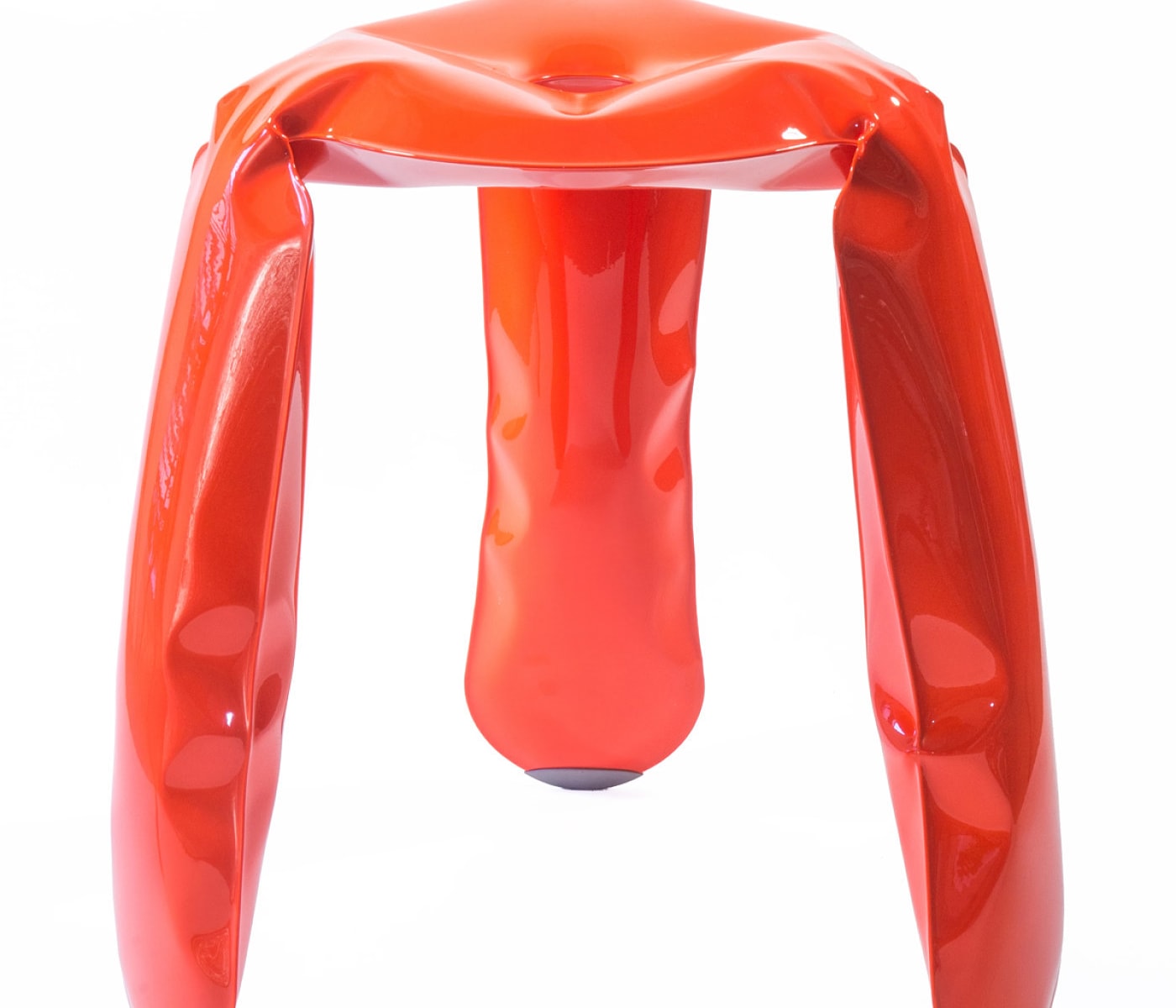
A stool shaped by pressure.
Both begin by designing how a material will take shape. Inflating welded steel and casting a cake in a mould use different processes to produce a precise form.
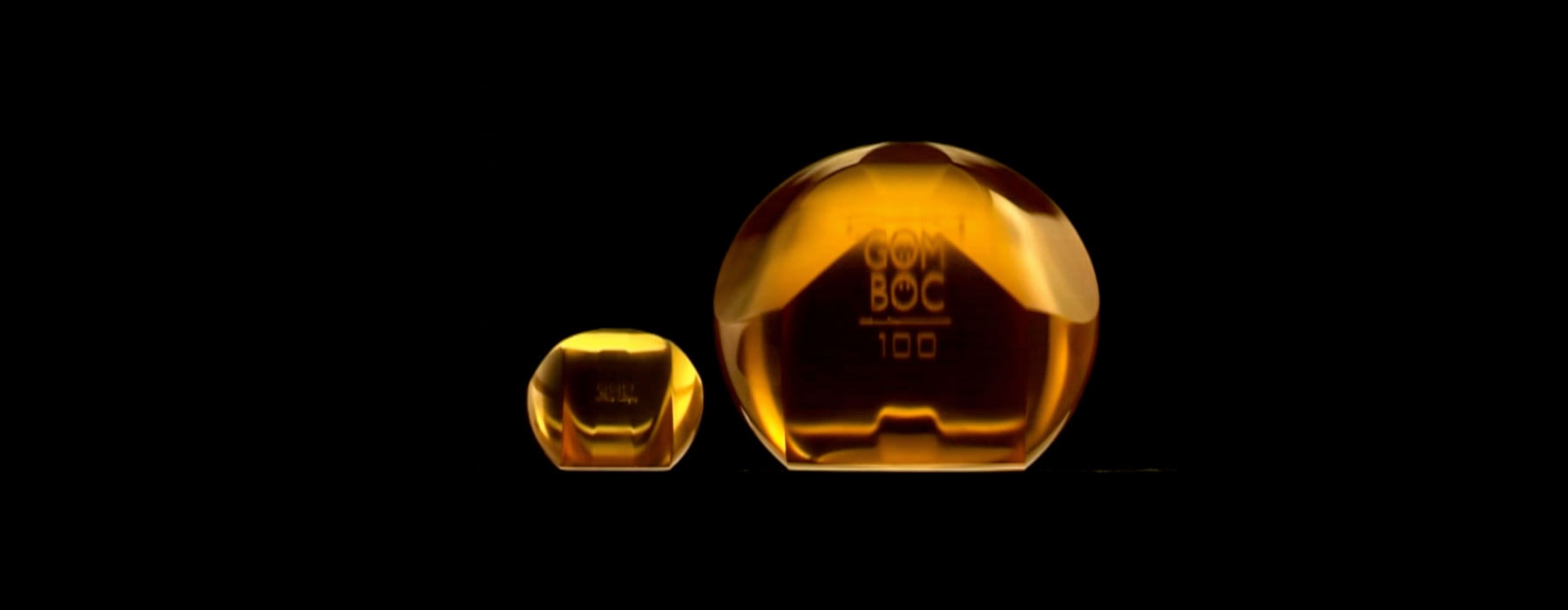
The shape is the mechanism.
Both make geometry do practical work. A mould determines the final surface of a cake; the Gömböc’s shape determines how it settles under gravity.