A calculating machine in the palm of a hand.
Curta makes arithmetic physical. Set the digits around its body, turn the handle and watch a result appear in the counters above.
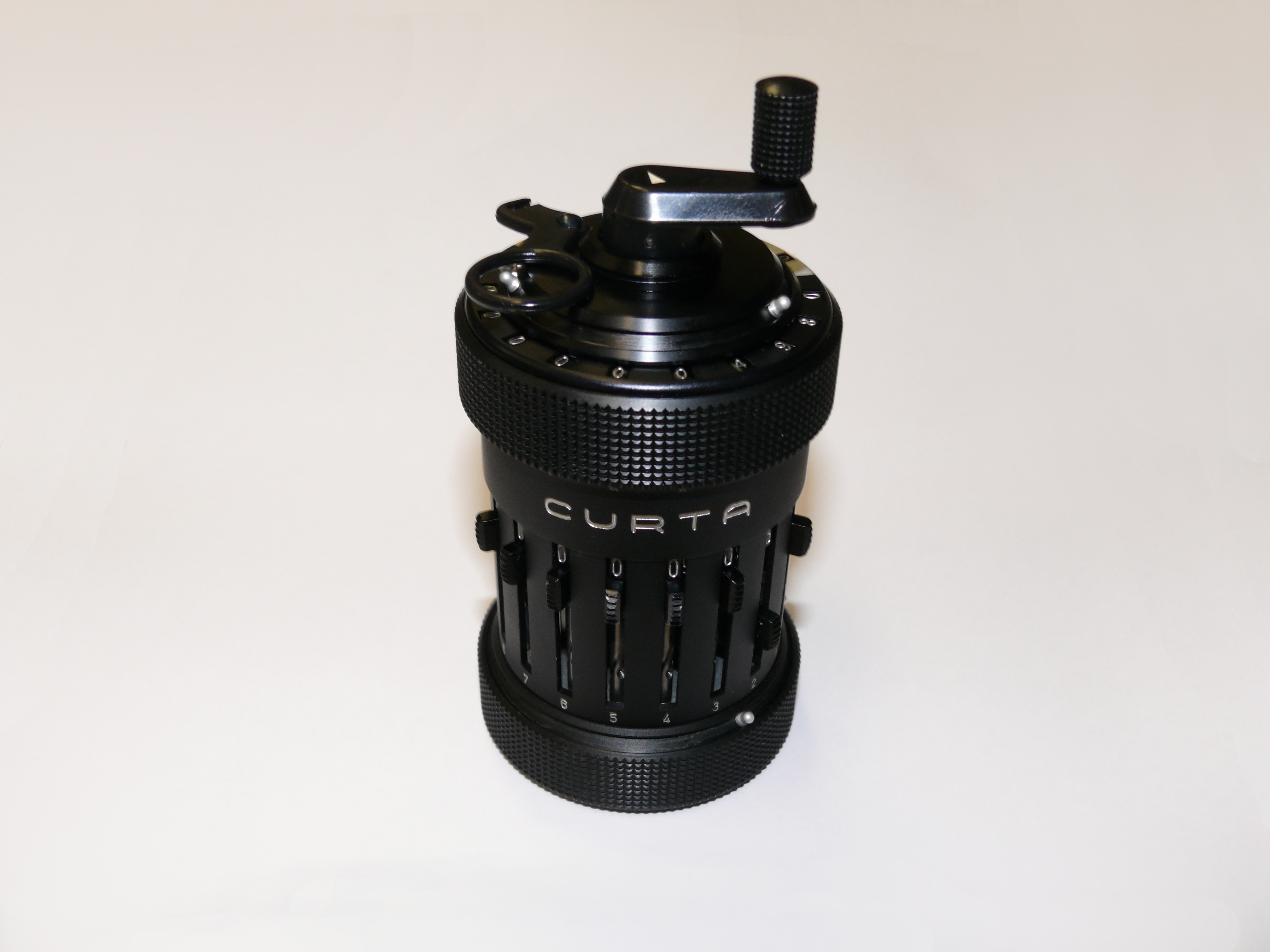
In practice. A historical manufactured product. Museum collections preserve calculators made by Contina in Liechtenstein, including a Type I from the 1950s.
What to keep in view
This is a historical example, not a current product launch. Type I and Type II specimens have different dates and capacities; museum dates should not be treated as one universal introduction year.
A machine built around the hand
Curt Herzstark developed the compact calculating mechanism and moved to Liechtenstein after the Second World War to manufacture it. The Whipple Museum identifies its Type I specimen as a Contina machine made in Mauren in the 1950s.
A complemented stepped drum lets the calculator handle addition and subtraction; sequences of turns and changes of position perform multiplication and division. The power source is the person holding it.
Portability changes the design problem
Our reading: the achievement is not simply making an existing machine smaller. The controls, counters and mechanism are arranged around an object that can be held and operated together.
Curta belongs here as a historical design benchmark. It shows how a demanding capability can become portable when its internal architecture and its physical interface are developed as one.
Read next.

A musical idea, made visible.
A hand-operated mechanism makes an invisible process tangible: arithmetic in Curta, musical sequencing in Musicon.

The shape is the mechanism.
Both put capability into a physical object, but in different ways: an intricate mechanism versus a carefully calculated shape.