Use the heat before taking the bath.
Thermal water arrives much too hot for a swimming pool. Caldea treats that temperature difference as an energy source for the spaces around it.
 AD Andorra
In practice. The operating spa in Escaldes-Engordany describes heat recovery from spring water through titanium heat exchangers, before the water enters its bathing lagoons.
What to keep in view
The 62% figure is Caldea’s own reporting. Heat recovery does not make the spa impact-free or establish medicinal benefits for its water.
Follow the heat through the building
Caldea receives natural thermal water at around 70°C. Bringing it down to bathing temperature releases heat that can be transferred into the building’s heating system. The spa describes titanium-panel heat exchangers as part of this process.
Heat recovery is one part of a working spa. Filtration, circulation and continuing water renewal remain essential operational tasks, with their own energy requirements.
Design around the temperature difference
The familiar image is a dramatic spa interior. The less visible design decision is to connect the visitor experience to the energy system: water that needs cooling becomes a useful source of warmth elsewhere.
This is an example of cascading use. Instead of asking a resource to perform only its final, most obvious task, the building makes use of its earlier condition too. The same question can be asked of many warm process streams, although each requires its own engineering.
Operator-reported figure · Reporting period not stated
62% of energy supplied by thermal water
Caldea reports that its thermal water supplies 62% of the complex’s energy. Heat recovered as the spring water cools is used elsewhere in the building.
What this tells us. This is the operator’s published share, not an independently audited annual energy saving. The page does not specify the reporting year.
Read next.
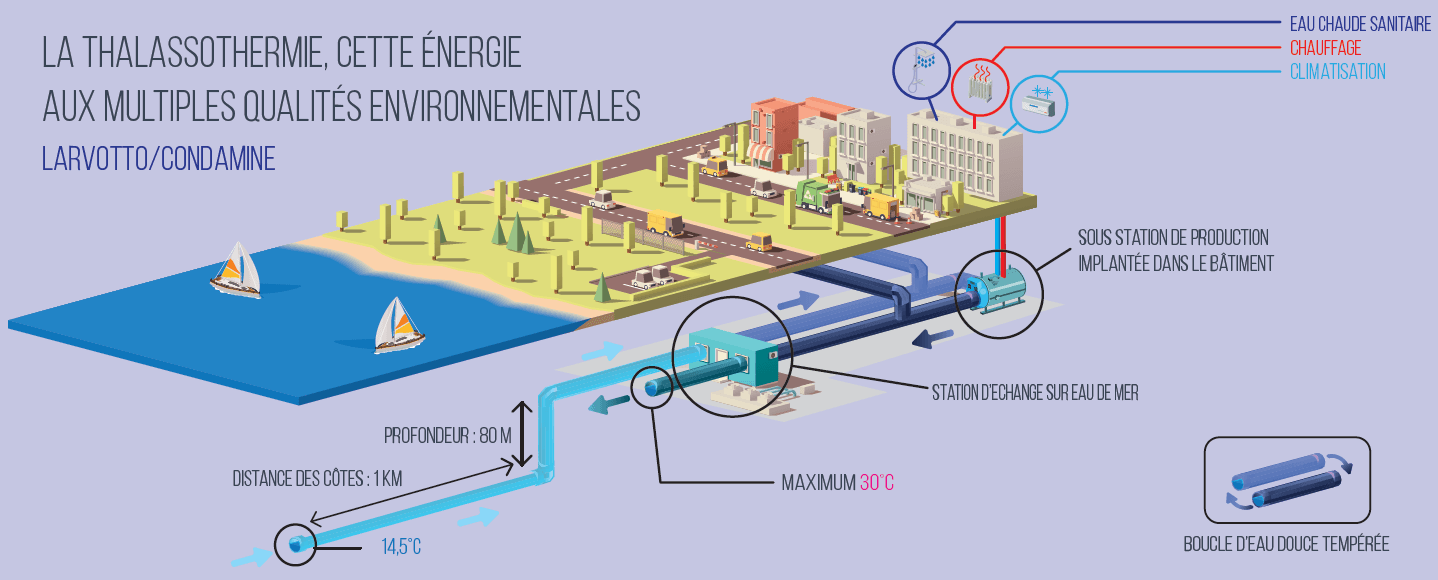
The sea can heat a neighbourhood.
Both connect a nearby water resource with the energy needs of buildings. Compare recovering spring heat with exchanging heat through a coastal network.
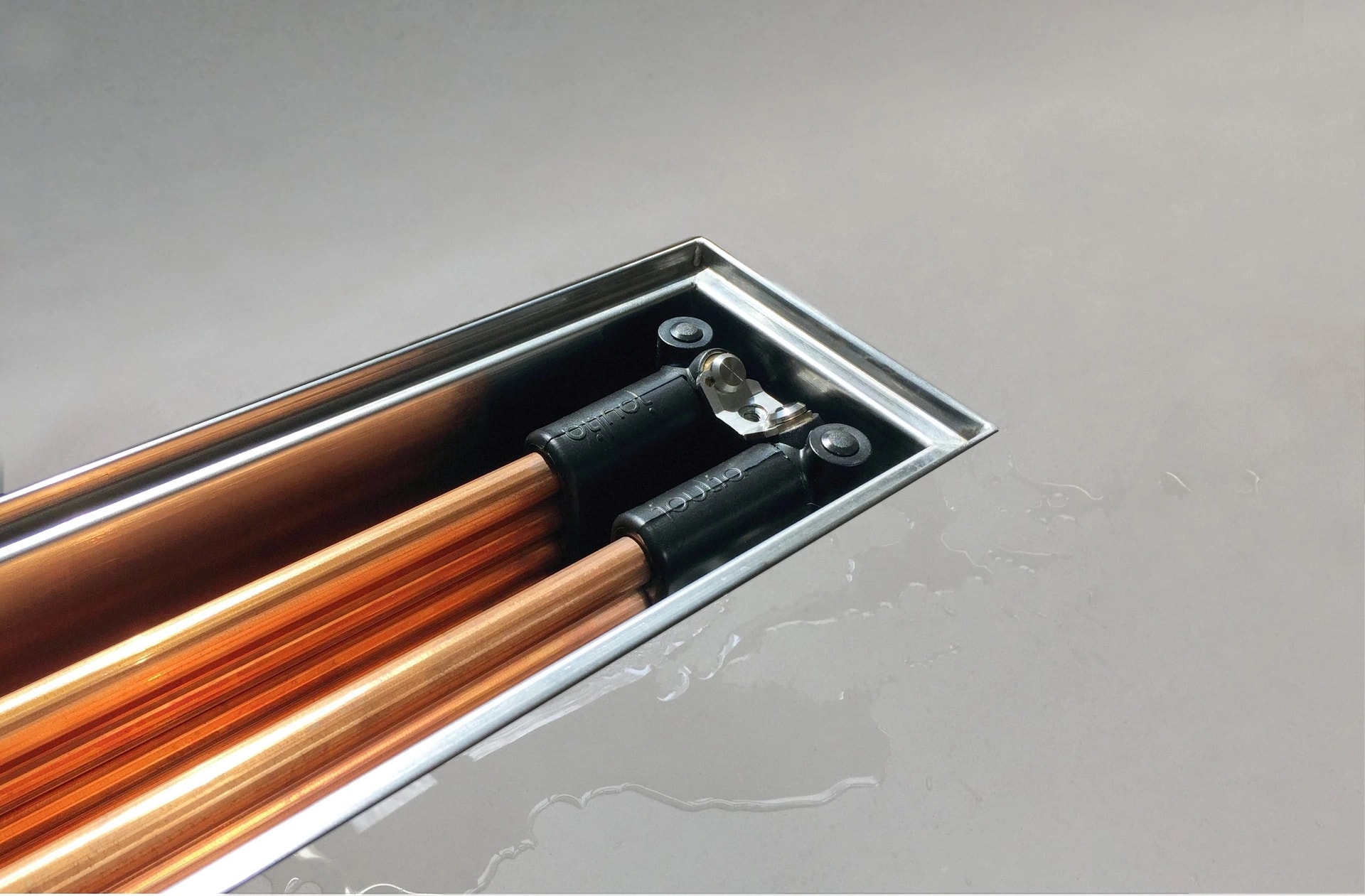
Recover the heat before the water leaves.
Both recover heat during a process that already moves water. Compare the scale of a thermal spa with one shower drain.