An idea you can switch on.
Tom Ouwerkerk wanted to make a light appear to float. Magnets, a printed frame and a small Arduino board turned the idea into an object for the room—and a project others could follow.
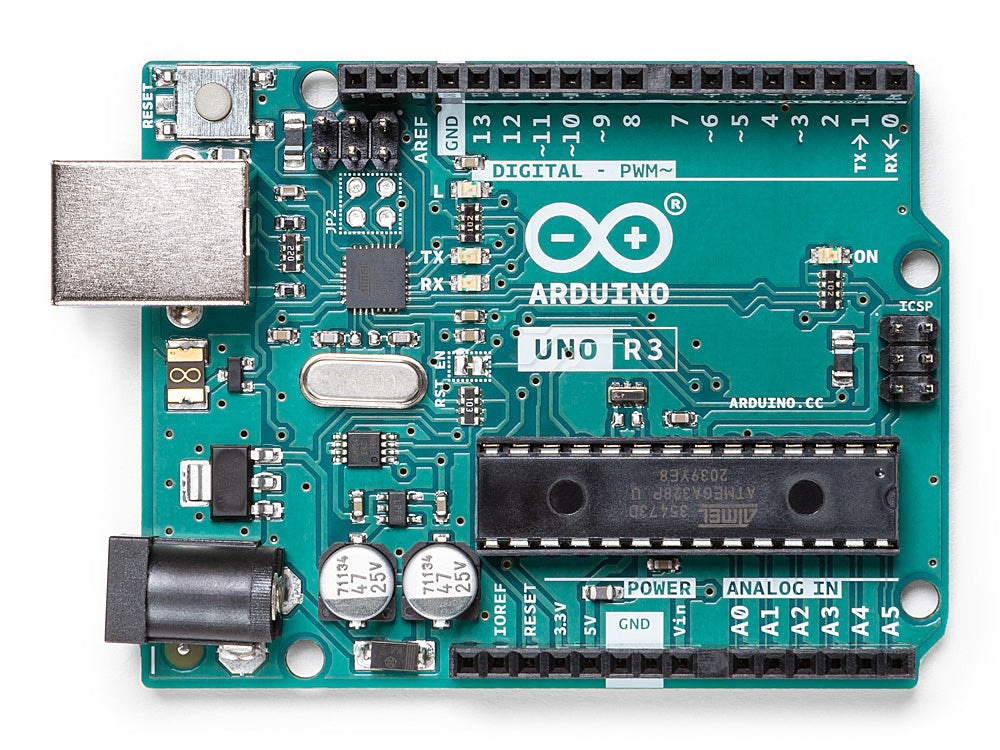
In practice. An established electronics and software platform originating in Ivrea, supported by boards, documentation and practical examples.
What to keep in view
This is a platform and design-history case rooted in Ivrea, not a claim that every current Arduino product is made in Italy. Individual products and components have distinct capabilities and licences; a prototype is not automatic evidence of production readiness.
A lamp that seems to float
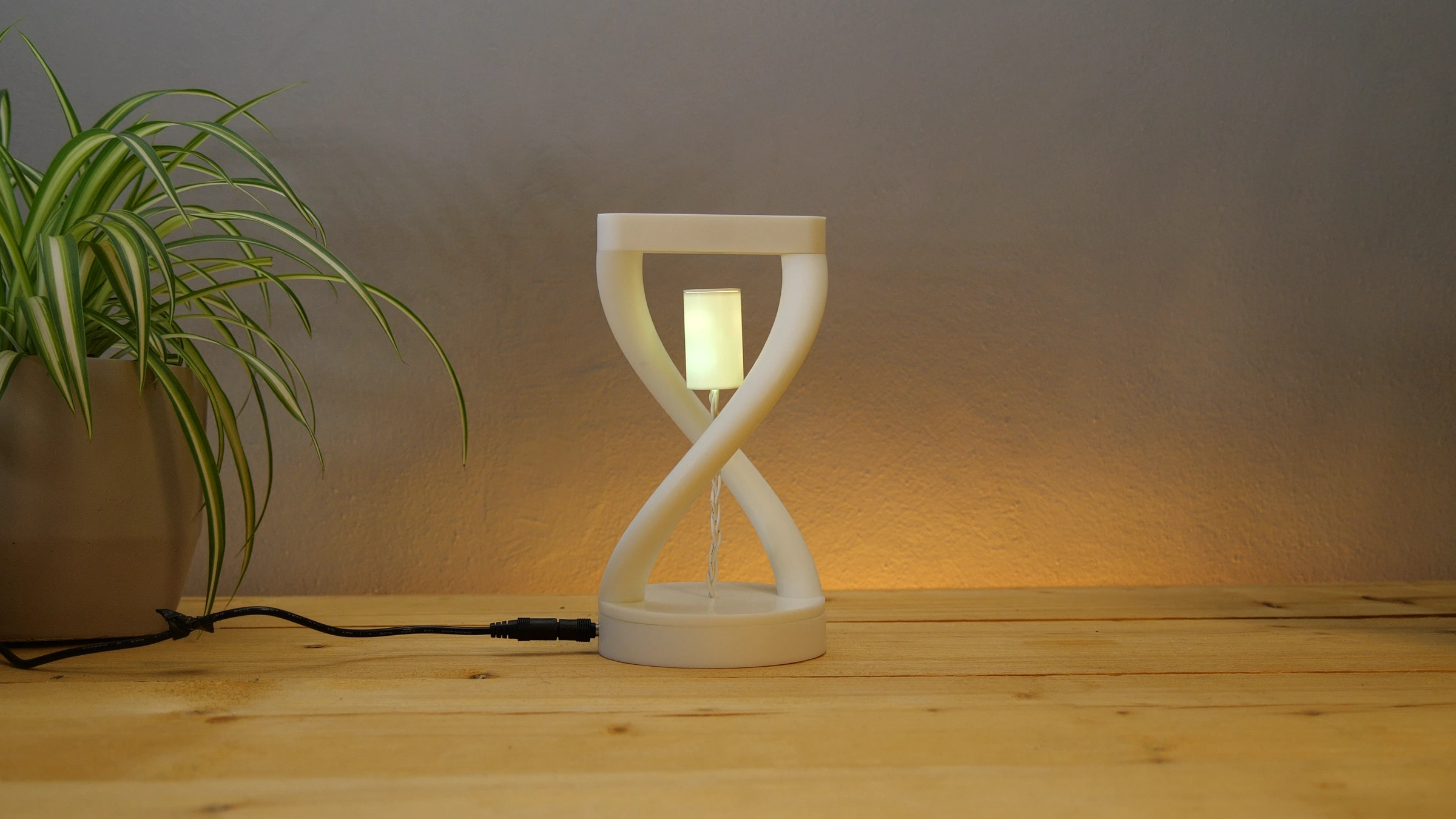
In a project featured by Arduino in March 2022, designer Tom Ouwerkerk suspends a glowing cylinder inside a twisting, 3D-printed frame. Magnets create the suspended effect. An Arduino Nano Every controls four coloured LEDs and detects when the light is returned to its resting position.
The division of labour is revealing: the frame establishes the shape, the magnets hold the light and the electronics determine how it behaves. Arduino gives the designer one part of a working object, leaving the appearance and interaction open to invention.
Leave a route for the next maker
Ouwerkerk shares the build on Instructables, including printable parts, assembly photographs and programming steps. He explains why the printed LED holder needs to diffuse the light and treats the magnetic off-switch as an optional addition. Readers can see individual choices behind the finished object.
The lamp still involves printing, wiring and soldering. Its value as a shared project is that those stages are visible: someone can inspect the work involved before deciding to attempt it. The finished photograph and the build record answer different questions.
A platform becomes useful through what people make
Arduino combines electronic boards with software, documentation and a community of students, makers and professionals. A light, motor or sensor gives code a visible consequence. Shared examples offer somewhere to start, then something to change.
Here, a board has become a small domestic experience: lift the light, return it, watch the colour change. That is the appeal of making with a platform like Arduino. You can decide what an object should do, then work towards a version that does it.
Read next.
From using technology to making with it.
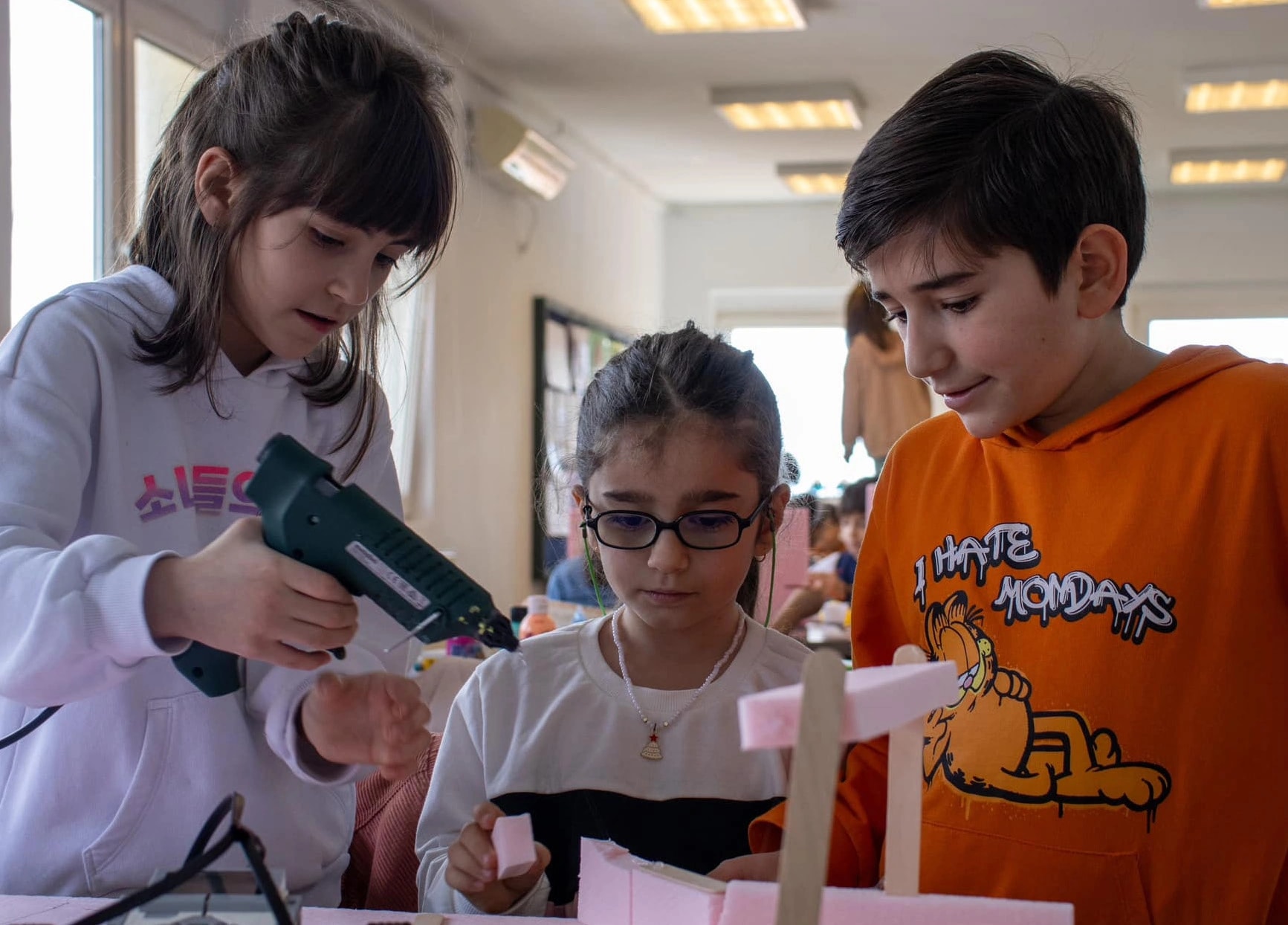
A makerspace provides the place and support; an open electronics platform provides a tool for experiments. Access needs both.
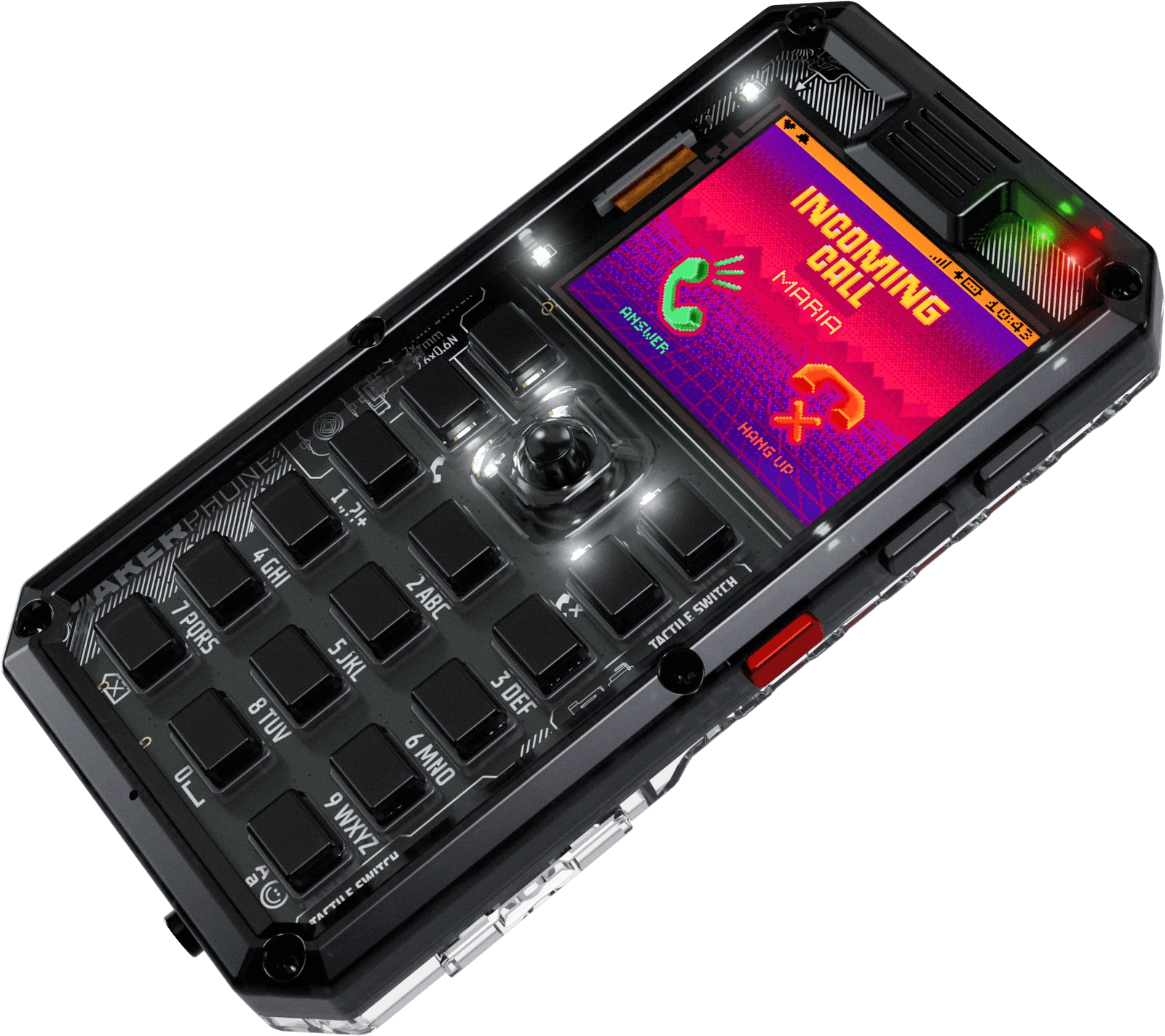
Build the phone before you use it.
Both leave room for the learner to build and program. Compare a phone-shaped kit with a more general electronics platform.