Your shelves can move on with you.
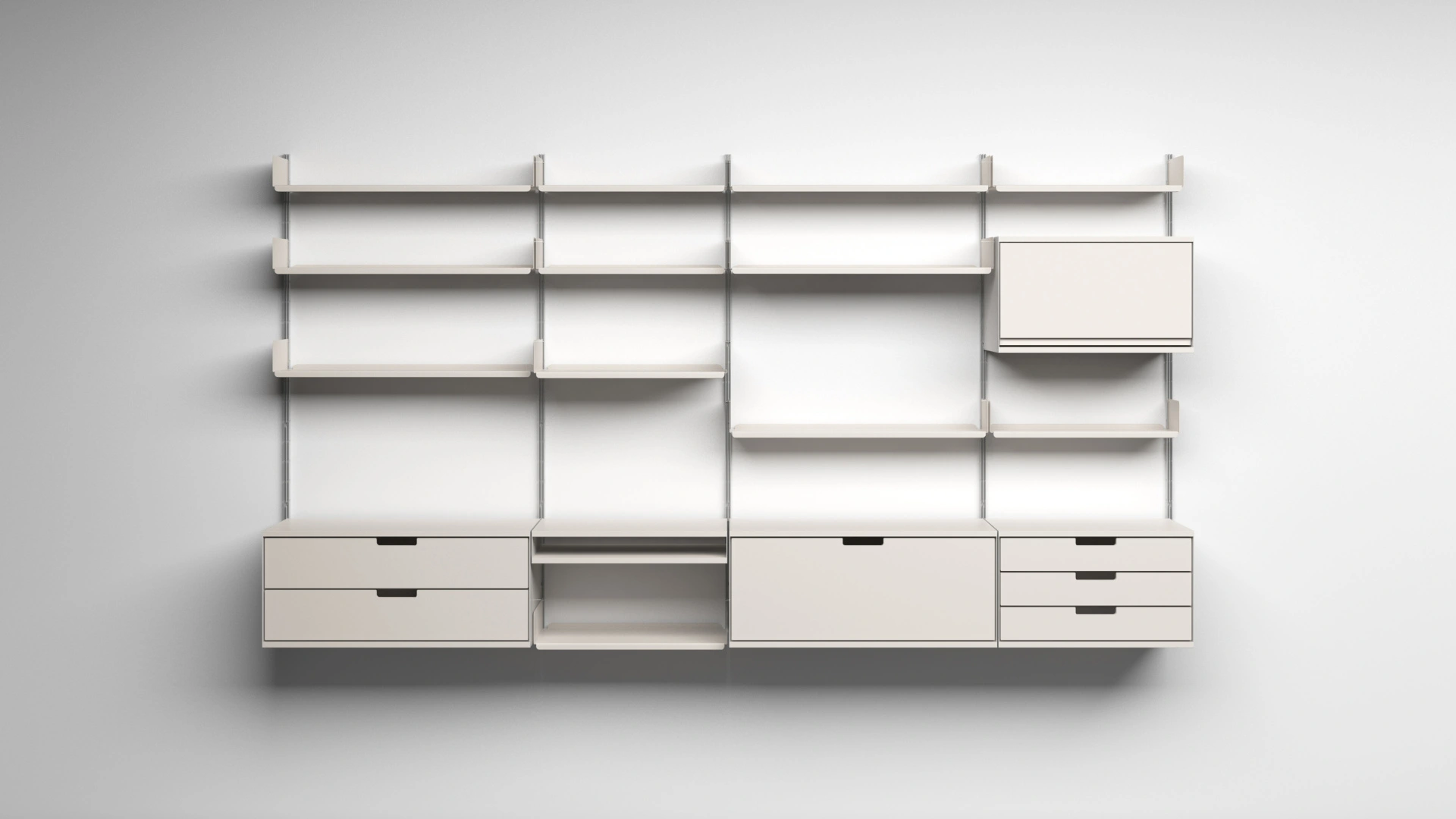
A bookshelf can become a desk, grow into another room and move to another home. Dieter Rams’s 606 makes those changes part of the original design.
 GB United Kingdom
In practice. Designed by Dieter Rams in 1960, the 606 Universal Shelving System continues to be manufactured by Vitsœ in England.
What to keep in view
Compatibility, wall suitability and installation need planning. Long production history does not guarantee indefinite future availability or a particular resale value.
Start with the rail
Designed in 1960, the system centres on an aluminium E-Track. Shelves, cabinets and desk surfaces hang from it using notched pins. Rearranging those components does not require tools; installing the supporting structure is a separate job.
Two bay widths can be combined. The useful unit is therefore neither a single finished bookcase nor an entire fitted room. It is a set of parts that can be recomposed as the things you keep—and the space you have—change.
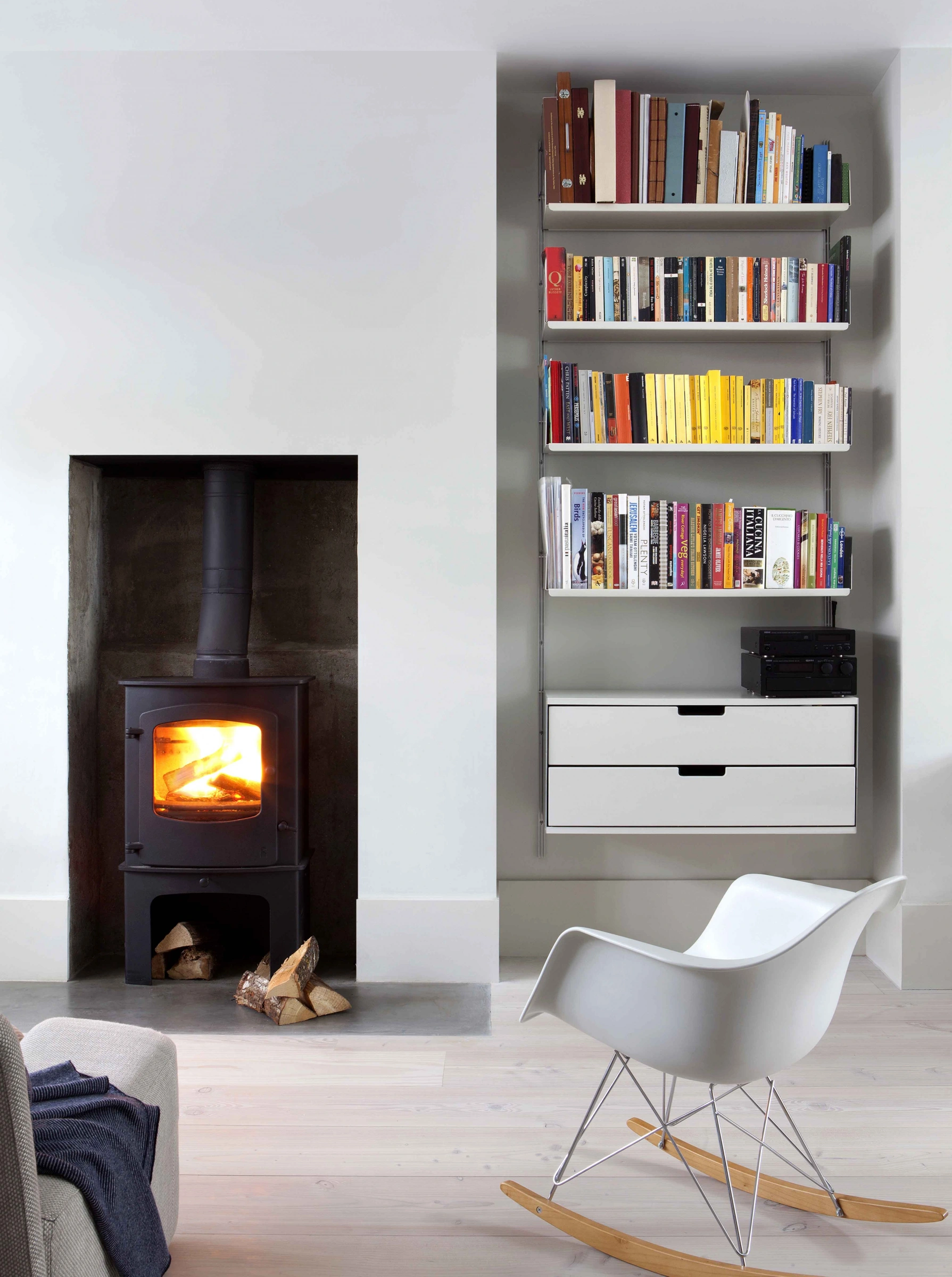
A new room, a different arrangement
Vitsœ documents wall-mounted, semi-wall-mounted, compressed and free-standing structures. They have different support and fixing requirements. Even the compressed version requires ceiling or beam fixings: it should not be mistaken for a universally drill-free solution.
The company offers a free planning service for new systems and moves. That is an important companion to modular hardware. Someone still needs to establish what fits, what can be reused and what the new wall or floor can support.
Vitsœ offers a free planning service. Bring dimensions and details of the supporting walls or ceiling; installation requirements vary by structure.
Plan a 606 systemRead next.
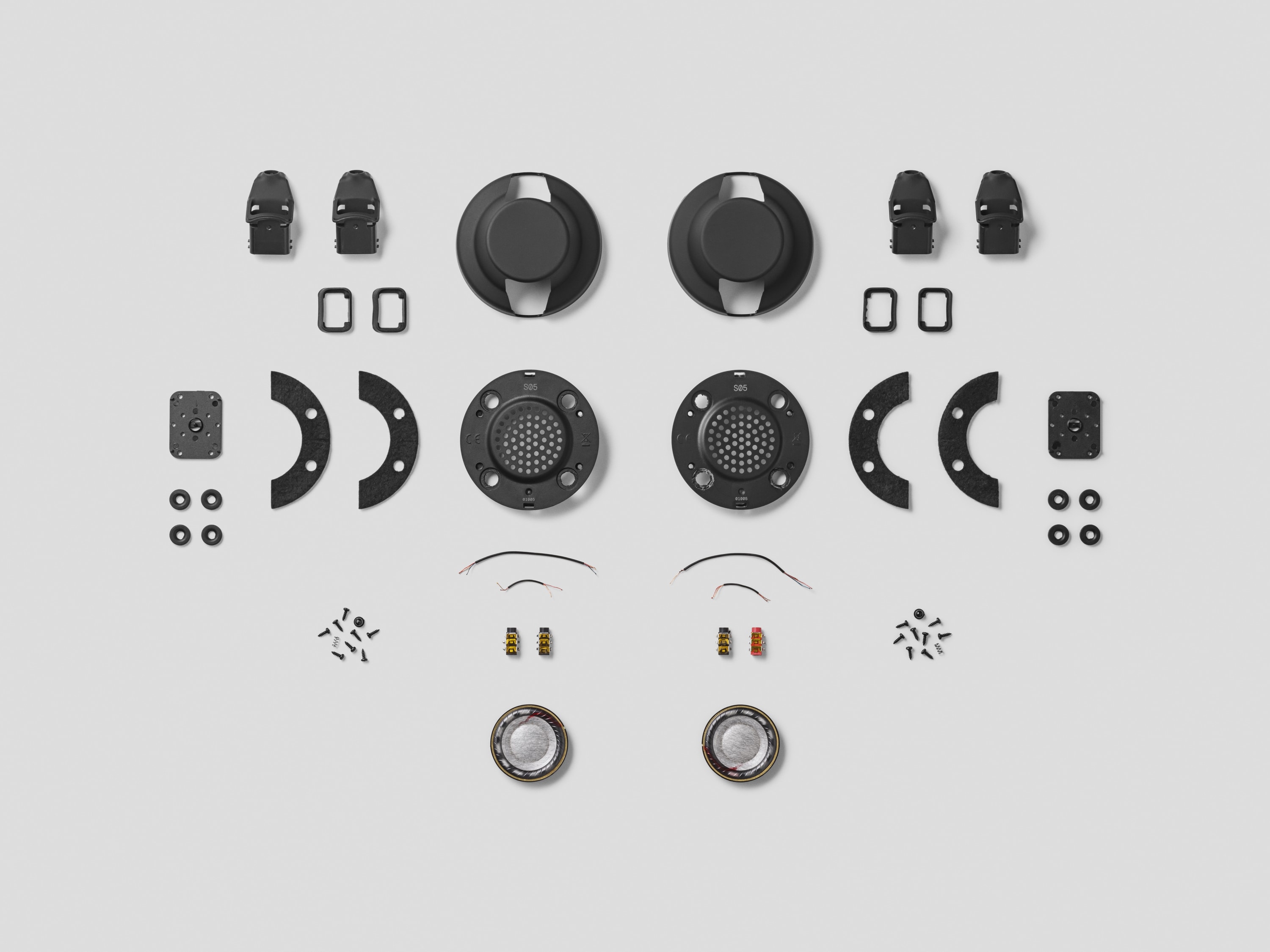
Keep the headphones. Change the part.
A shelving bay and a headphone module solve different problems, but both let the owner change part of a system.
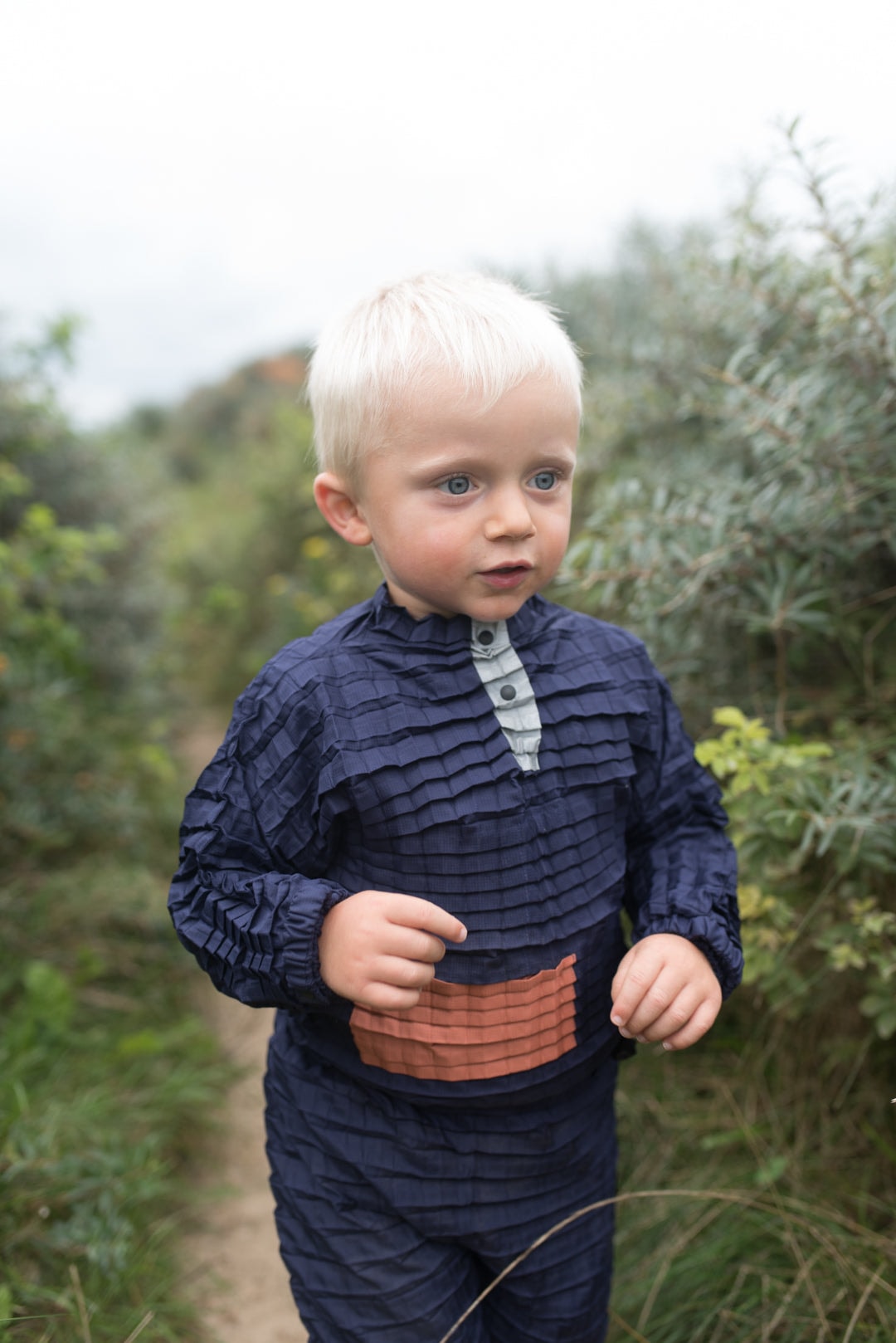
Clothes with room to grow.
Compare furniture that can be rearranged with clothing designed to accommodate a growing child.