Find out which bins need attention before sending the truck.
Sensors and route intelligence make container status visible before collection vehicles are dispatched.
 SK Slovakia
In practice. A Slovak technology platform with documented municipal and commercial applications; results depend on each deployment.
What to keep in view
Vendor deployment counts do not establish that every installation reduced cost, emissions or missed collections. Local operating results need separate verification.
Make the collection need visible
Sensoneo combines fill-level sensors, waste data and planning tools for municipal and commercial collection. The Slovak company’s project records show applications in different operating settings; a sensor attached to a container is one visible part of the system.
The central shift is from assuming that a container needs emptying on a fixed day to seeing its changing condition. Collection teams can then use that information alongside service obligations, vehicle capacity and practical route constraints.
Information must change the operation
Our reading: fixed collection schedules can send vehicles to half-empty containers while overflowing bins remain invisible until residents complain.
Smart-waste systems create value only when better visibility changes routes, service standards and accountability, not when sensors simply add another dashboard.
A useful evaluation compares the service before and after deployment: unnecessary visits, missed collections and the work required to maintain the new equipment. A fuller dashboard is an intermediate result, not the final public benefit.
Read next.
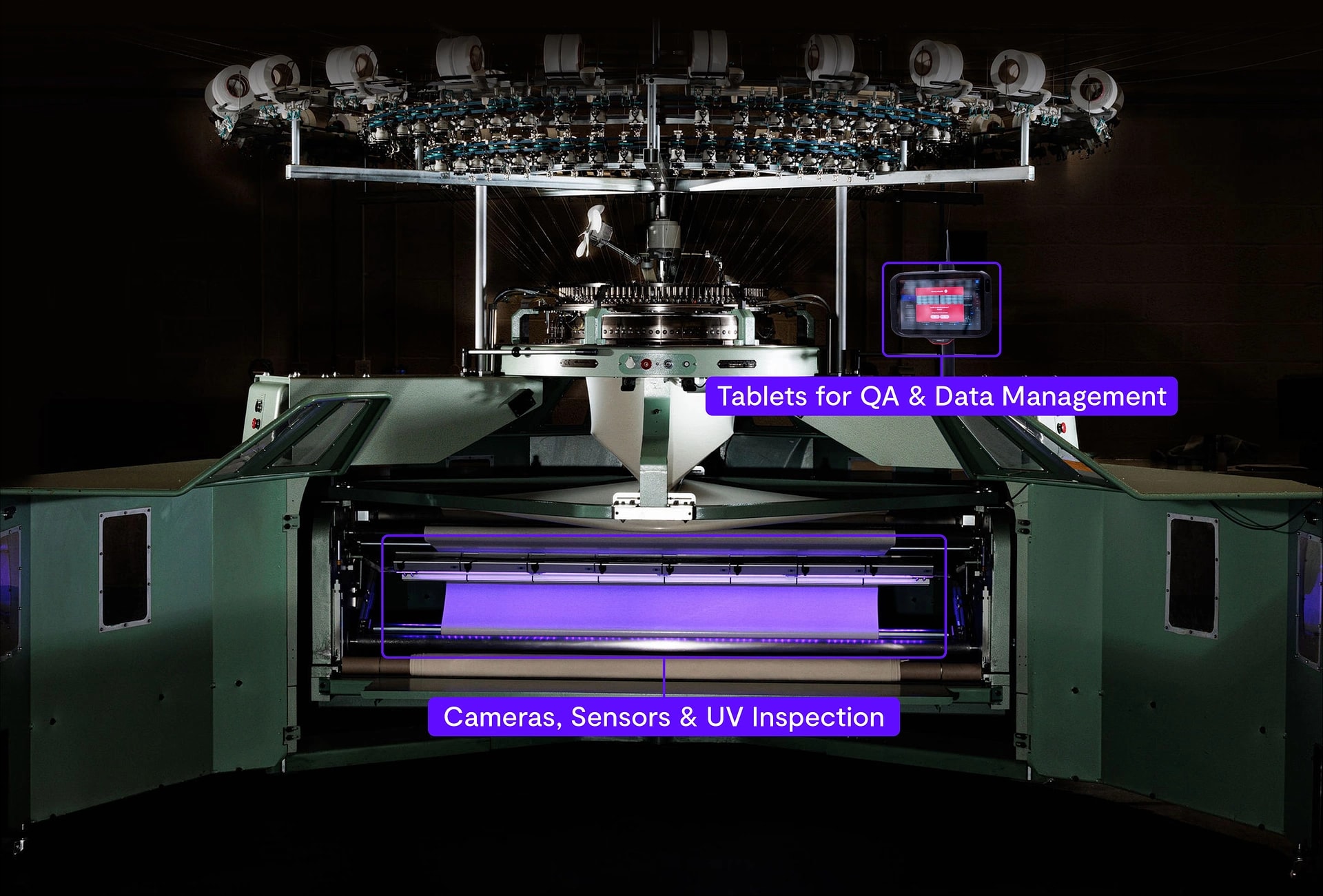
Inspect while the machine is knitting.
Both aim to make information arrive before unnecessary work multiplies. A useful signal needs an operational response, not only a dashboard.

Reuse designed around the return trip.
Both need information about material movement to change an operation. Collection planning and returnable packaging depend on reliable handovers.