The waterfront has something to say.
You can sit on it, walk along it or listen. In Zadar, the edge between city and sea is also a musical instrument.
 HR Croatia
In practice. A built waterfront installation by Nikola Bašić, opened in 2005. Zadar’s tourist board documents 35 pipes beneath the stepped edge.
What to keep in view
Sound varies with sea conditions. The official accounts document the built work, not quantified social or environmental benefits. Wet steps, weather and access conditions remain part of using a waterfront.
The landscape supplies the performance
Below the stone steps, pipes of different lengths and dimensions respond to the movement of the water. Air moves through the system to produce tones. The sea’s changing activity shapes the sound rather than a scheduled performer or a fixed recording.
The official destination account describes an installation extending along roughly seventy metres of waterfront. Its neighbour, Greeting to the Sun, is a separate work; the sound-producing steps are the Sea Organ.
Infrastructure becomes an invitation
Our reading: the project brings several ordinary functions together. A protective edge, a place to sit and a pedestrian route also become a reason to stop and pay attention.
Its lesson is not that every waterfront needs an instrument. It is that public infrastructure can create a direct, understandable relationship with the natural forces already present at a site.
Read next.
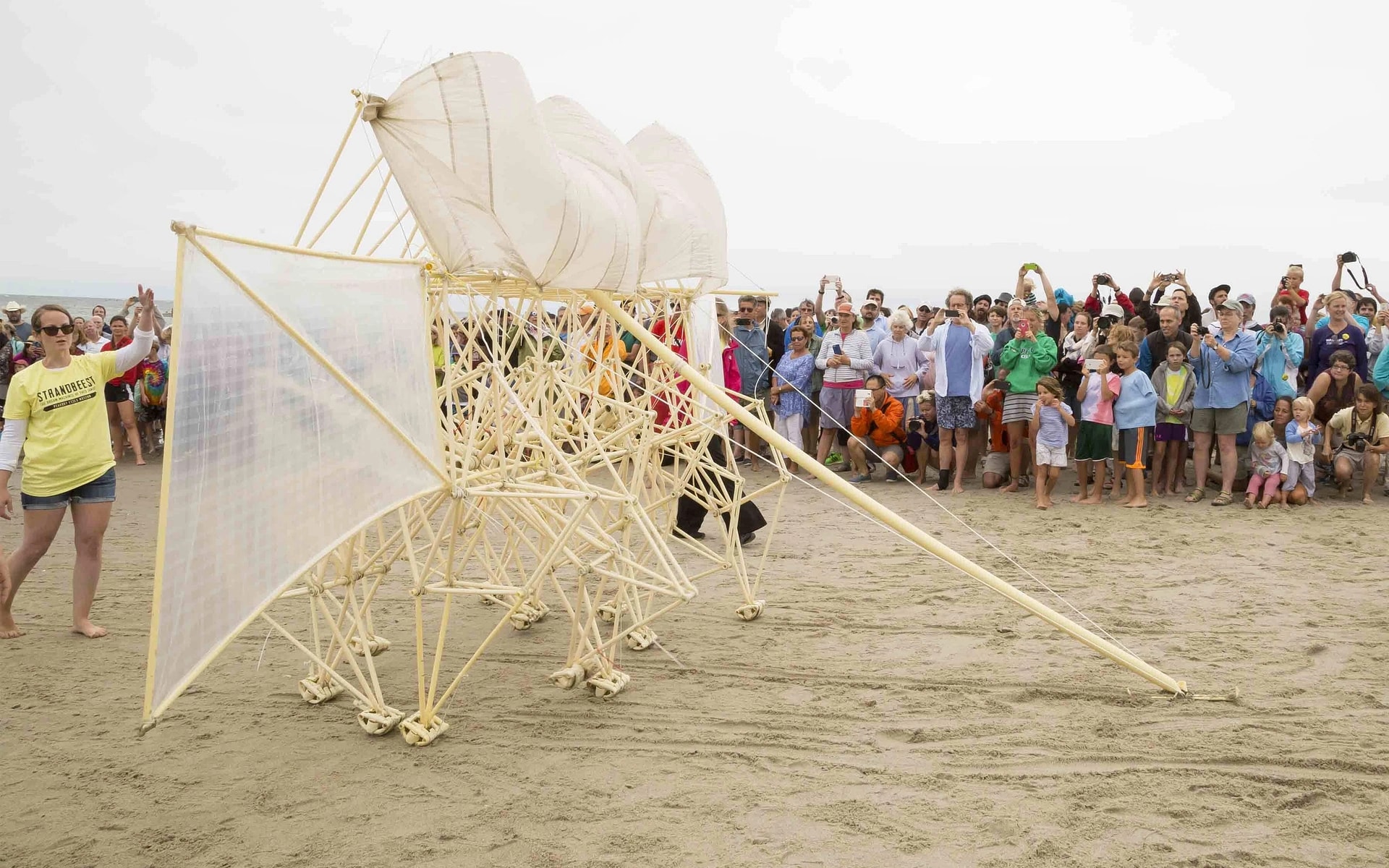
Give the wind something to walk with.
Both make an environmental force perceptible through an artwork: wind becomes walking, while waves become sound.

When engineering becomes public wonder.
Both turn engineering into a public encounter. One makes mechanical creatures move; the other lets waves produce sound through a built structure.