An archive can still have work to do.
A drawing can preserve an idea without resolving how to make it. Prostoria returned to Vjenceslav Richter’s archive to develop furniture for production, while distinguishing original designs from contemporary contributions.
 HR Croatia
In practice. Croatian manufacturer Prostoria’s Revisiting Richter project develops five collections and twenty products from archival research.
What to keep in view
Original Richter work and contemporary Richter+ extensions are different contributions. Archival gaps and new production choices must remain visible in the attribution.
Read the unfinished design carefully
Prostoria, the Richter+ design teams and researchers developed five collections and twenty products from Vjenceslav Richter's archival drawings, photographs, models and prototypes. Original Richter works and contemporary Richter+ extensions are credited separately.
Archival evidence becomes an active development system. Proportions, structure and comfort are resolved for contemporary production while the distinction between original design and new contribution stays visible.
Give new decisions their own credit
Our reading: design archives often preserve authorship while leaving unfinished ideas inert. Literal reproduction can freeze the object, while loose reinterpretation can erase what made the work coherent.
Read next.

Let an old camera meet a new sensor.
Both bring earlier design into present use. One keeps an existing camera working; the other develops archival furniture ideas into contemporary production.
Carve a future for a living craft.
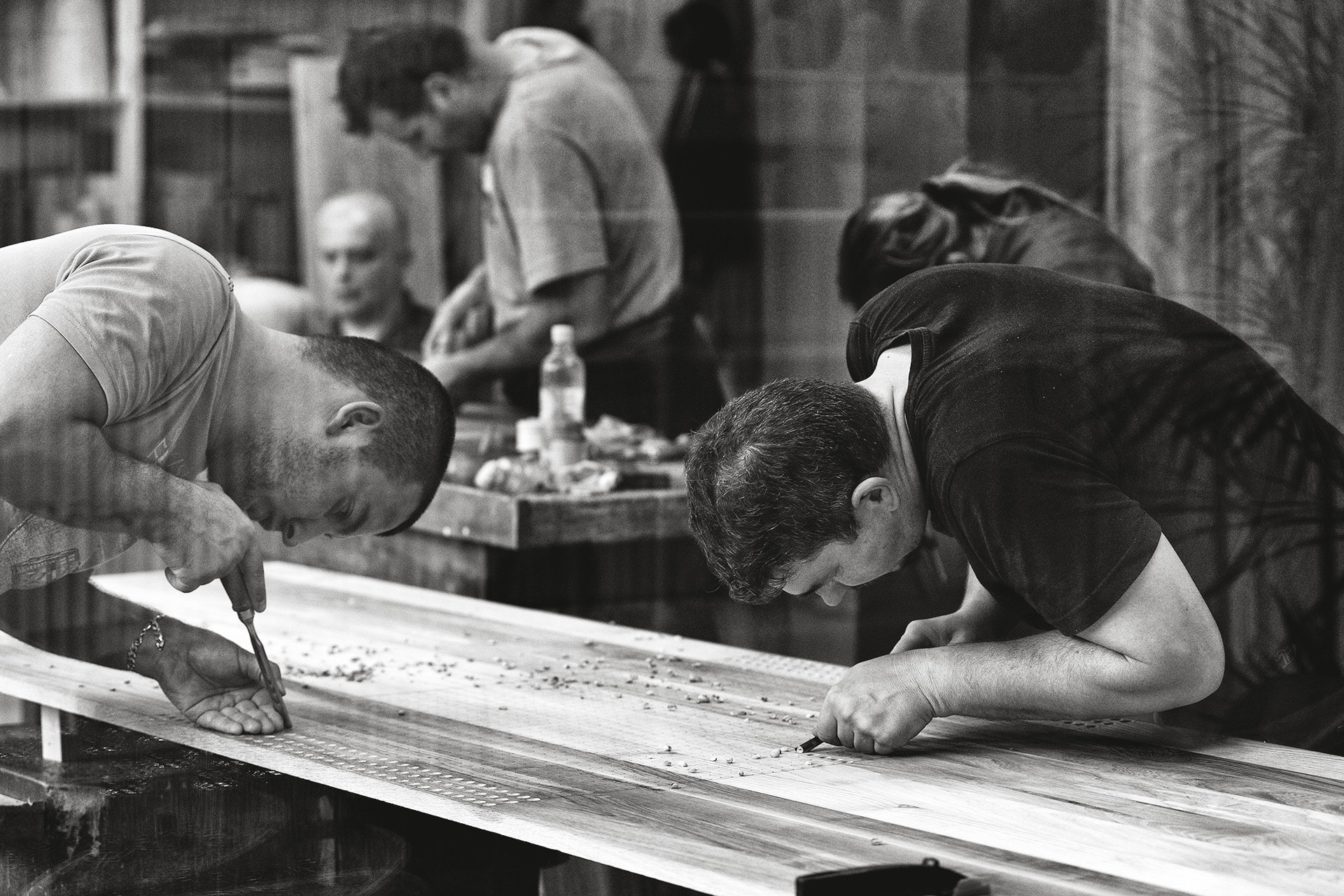
Both connect furniture with inherited knowledge. Archival design research and a living woodcarving tradition require different forms of authorship and care.