A chair that leaves room to move.
A chair usually tells you where its front is. Muista leaves that choice open, pairing a simple upholstered seat with a base that can gently rock.
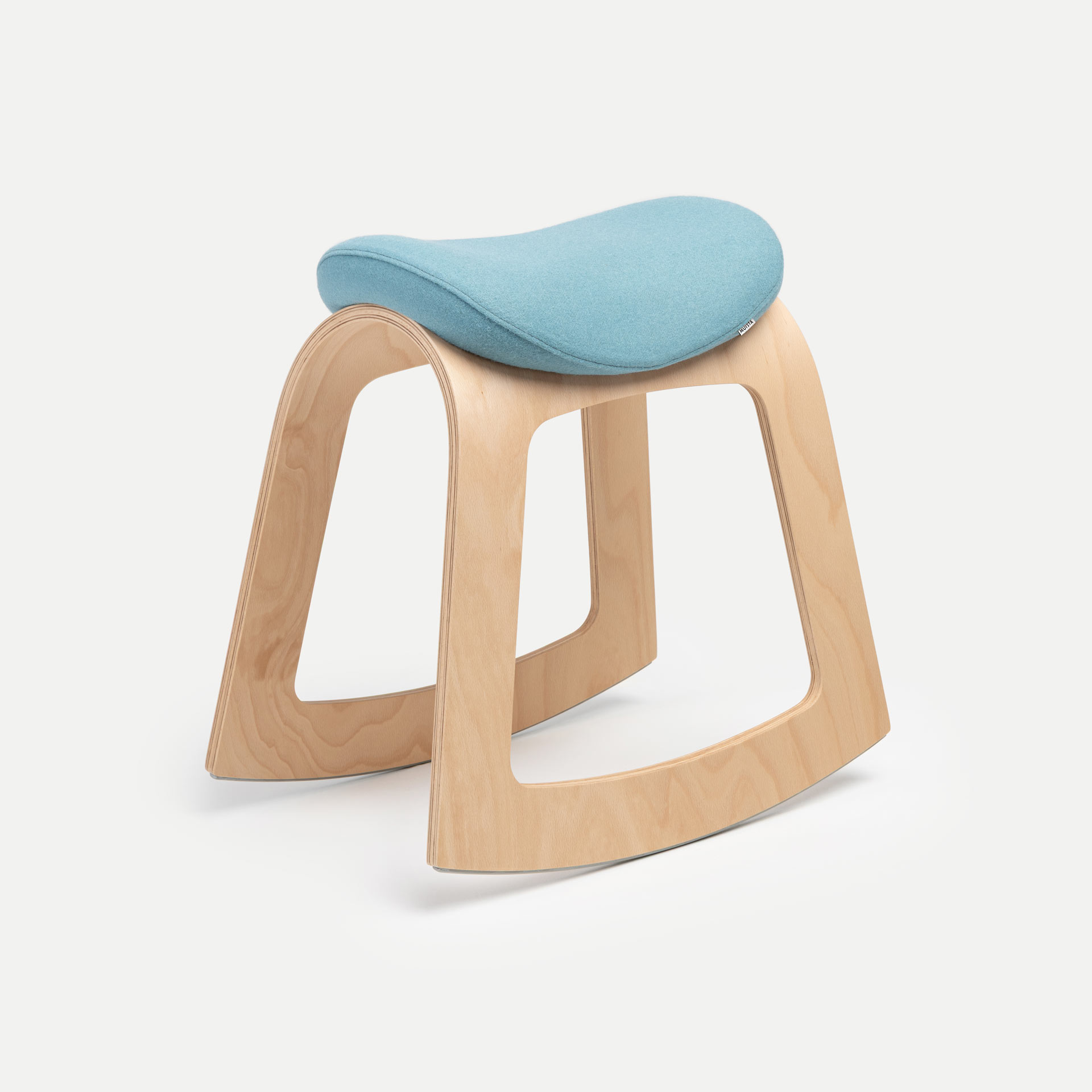
In practice. A commercially offered chair with two intended seating orientations. The maker publishes dimensions, use guidance and product variants.
What to keep in view
The maker documents the design and intended use, not proven treatment of back pain or universal ergonomic benefit. Suitability depends on the individual, desk height, task and tolerance for movement.
A different invitation to sit
Muista can be used lengthways in a straddled position or across the seat. Its curved wooden base allows gentle movement, while the furniture remains recognisably simple: there is no elaborate adjustment mechanism to learn.
The product page and FAQ explain the intended positions and practical fit. Those details are more useful to a prospective user than treating movement itself as a guarantee of comfort.
Test the fit between person and object
Our reading: Muista makes variation legible through its shape. Turning the chair changes the relationship between the sitter, the seat and the direction of movement.
The design question is whether that invitation works with a particular person, desk and task. A useful alternative seat need not be presented as a replacement for every conventional chair.
Read next.
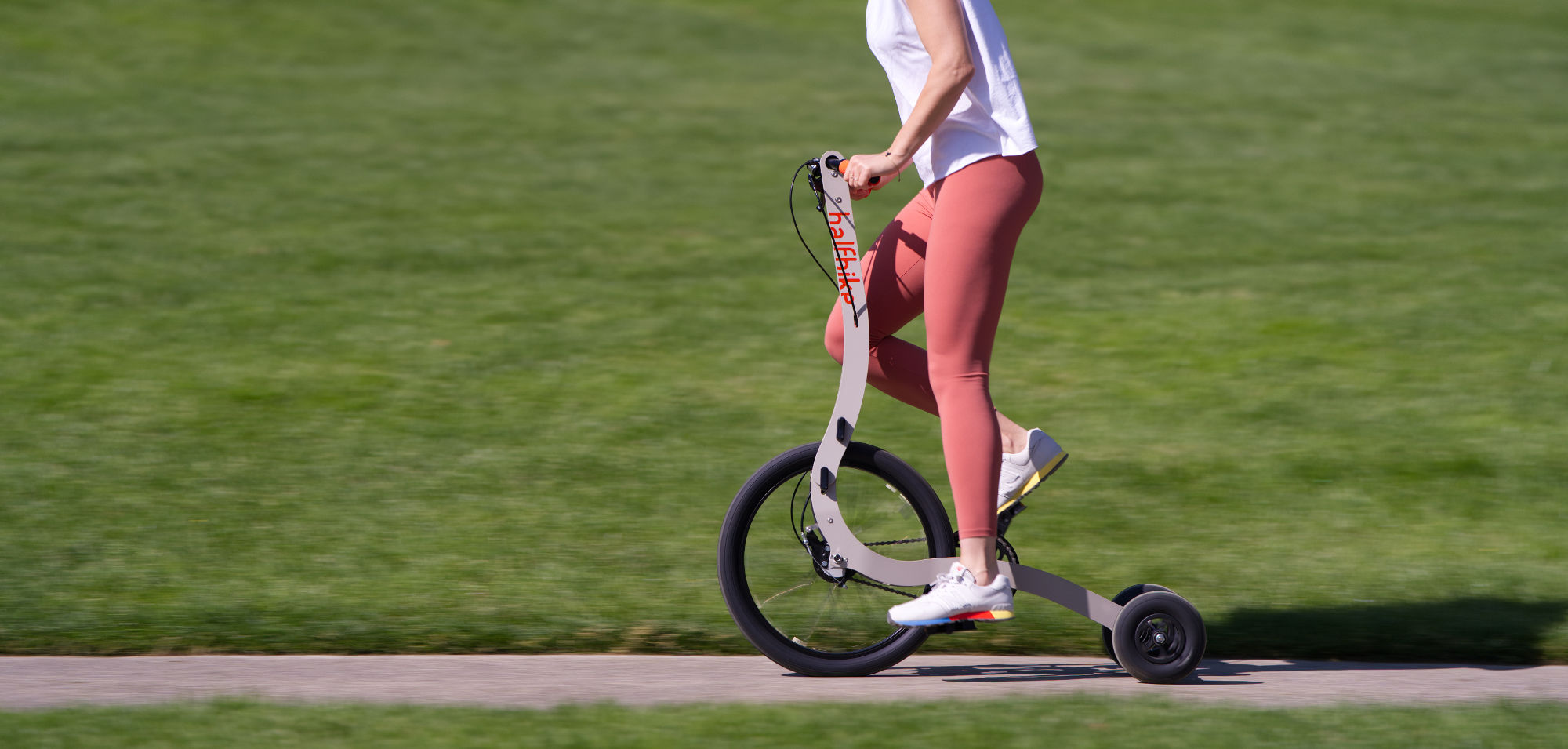
Stand, pedal and steer by leaning.
Both change how the body engages with a familiar object. One turns cycling into standing movement; the other lets sitting include rocking and alternative positions.
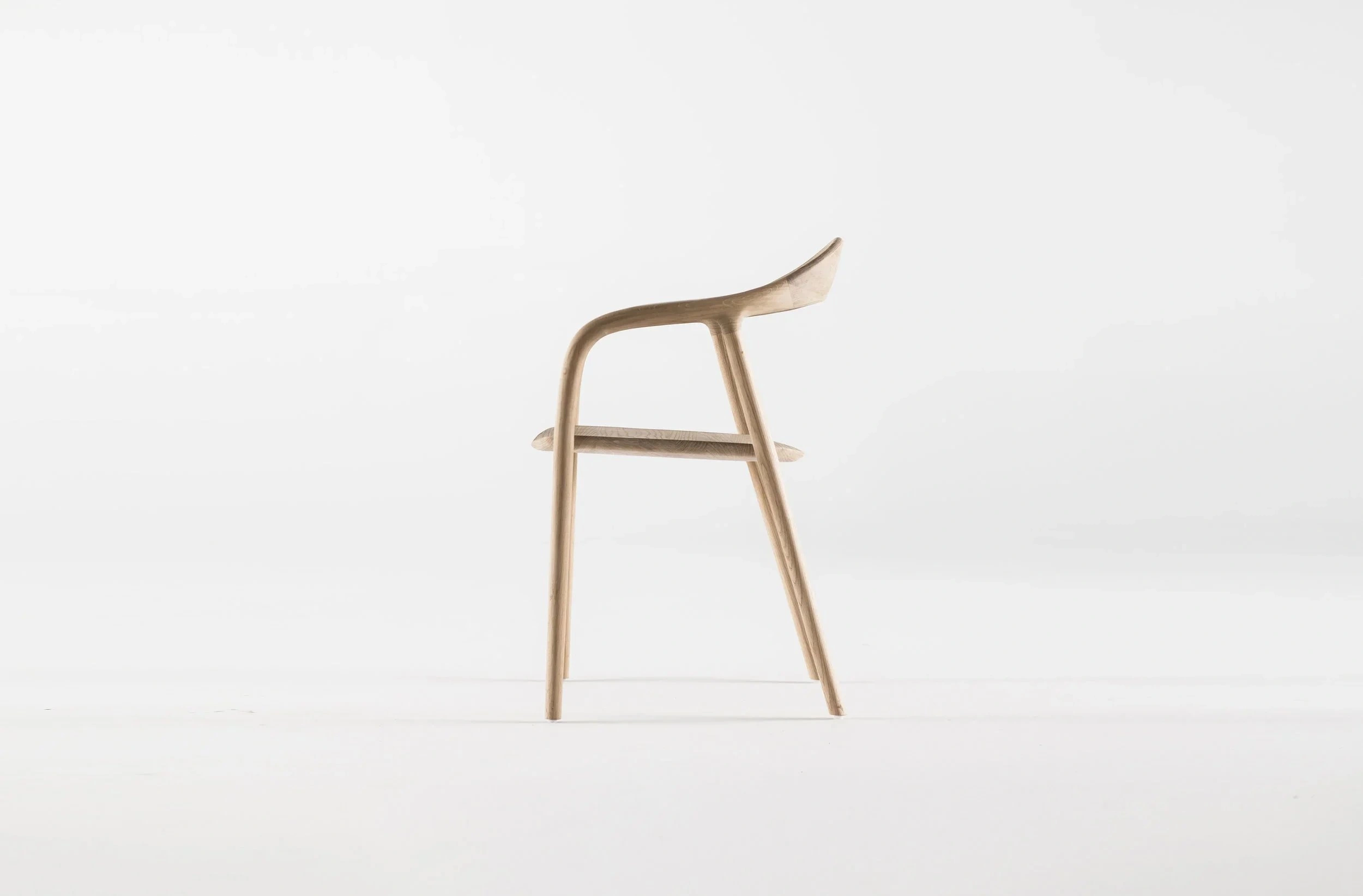
The craft behind a continuous curve.
Both make a chair’s everyday contact with the body central to its design. Compare tactile continuity with an invitation to move.